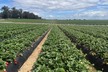
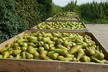
Fruit growing is the main agricultural activity in the state of Rio Grande do Norte. Among the most prominent crops are melon, watermelon, papaya and mango, the fruits that are the flagship of state production. The Brazilian Association of Producers and Exporters of Fruits and Derivatives (Abrafrutas) recognizes the leading role played by fruits from Rio Grande do Norte in terms of the volume exported by Brazil.
In addition to growing in volume, exports of Potiguar fruits also grow in the number of destinations. The President of the Rio Grande Norte Fruit Growing Executive Committee (COEX/RN), Fábio Queiroga, highlights the representation of the United States, England, Germany, other European countries, Central America, the Middle East and the recent opening of China to melon of the state, after obtaining the geographical identification seal for the melon from the region of Mossoró.
“The only fruit that the Chinese market allows to enter from Brazil is the melon here in Mossoró, which enjoys geographical identification”, celebrates Queiroga.
Despite this possibility of exporting melons from the region to China, shipments are still in their infancy due to a series of logistical impediments. Melon producer in the municipality of Mossoró/RN, Ajax Dantas, says that, in addition to the cost of this shipment being very high, there is a big problem regarding the deadlines for this transport, which ends up harming the quality of the fruits before reaching the final destination.
Source: abrafrutas.org