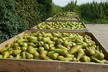
The pear harvest has begun in the Southern Hemisphere. However, since the outbreak of Covid-19, shipping capacity has been limited, and cargo ships are often delayed, which creates difficulties for farmers who try to keep their fruit fresh. Keeping fruit fresh in storage and transport is an important issue in the international fruit industry. Manager Li is the spokesperson for Shandong AWT Bio-tech Co., Ltd., a leading company in fresh-keeping services for refrigerated fruit storage facilities.
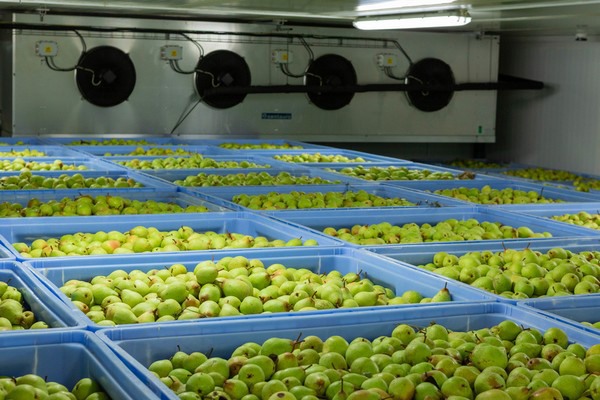
Storage conditions in fresh pear warehouses
Manager Li first introduced ideal conditions for storage of fresh pears. "First, the temperature in storage facilities is very important. Fresh pears are best kept at temperatures around 0-1℃. However, if the pears are immediately brought to that temperature after harvest the fruit will suffer damage. The temperature has to be lowered gradually. Moreover, the temperature in storage has to be stable and large fluctuations should be avoided. Second, the humidity level is very important as well. In cold storage the ideal RH is around 90%-95%.
"However, in most warehouses the temperature is slightly higher, so humidity levels are kept at RH 85%-90%. The third element is the gas composition inside the warehouse. Most fresh pears are sensitive to CO2 and small concentrations of O2. The level of CO2 should not exceed 1% to avoid plant disease. In addition, some pears release large volumes of ethylene, which stimulates deterioration in organic material, so ethylene-inhibiting components are required to extend the shelf life of the pears," said manager Li.
Ethylene is the key to slow down deterioration in fresh pears
"The best way to preserve the nutrients and freshness of pears is to control the ripening and aging process," said manager Li. "Whether you use refrigerated storage or air-conditioned storage, only if you have proper control over ethylene can you preserve the nutrients, firmness, and flavor of fresh pears. Control over ethylene can extend the storage period of fresh pears by more than 3 months. Ethylene is a gaseous hormone. Fruits release small amounts of ethylene during the ripening process. However, the volume of ethylene in meristems, sprouting seeds, and wilted flowers is rather large. As the ripening process progresses, the volume of ethylene grows. And ethylene stimulates the combination of RNA and proteins, which speeds up the breathing process, and that in turn advances organic transformation and the ripening process."
High-grade 1-MCP can effectively extend the shelf-life of fresh pears
"1-MCP competes with ethylene, whether this is the ethylene produced within the pear or from the outside. 1-MCP combines with ethylene-receptors in the fruit, thus blocking the receptors from combining with ethylene. This temporarily halts the ripening process in pears. Only when the fruit is exposed to fresh air outside the storage facility does the production of new ethylene receptors start up again. And that is when the breathing process and other organic processes related to ripening begin anew. 1-MCP thus helps to maintain product quality during long periods in storage," explained manager Li.
"Our new Logfresh technology can help 1-MCP bind with ethylene receptors in a cold storage setting in less than 24 hours. After 24 hours, the pears can then be stored under regular storage conditions. Logfresh technology can effectively alleviate the problem of plant disease in storage and keep the pears firm, crisp, colorful, flavorful, and full of nutrients," said manager Li.
"We have received great responses from clients in Argentina, New Zealand, South Africa, and Australia who have used our Logfresh technology to keep their pears fresh in storage. And our Logfresh technology can be used for other ethylene-sensitive fruits, vegetables, and other organic products such as apples, kiwi fruit, avocados, bananas, tomatoes, and fresh-cut flowers."
Shandong AWT Bio-tech Co., Ltd. has more than 25 years of experience in the research and development of fresh-keeping products. The company team emphasizes technological innovation and has developed 1-MCP fresh-keeping products, mango ripening products, banana ripening products, grape fresh-keeping products for domestic and international markets. Shandong AWT Biotechnology has already registered their 1-MCP products in Argentina, New Zealand, and Australia. The company team closely cooperates with distributors in many regions, and is looking for strategic partners across the globe.
For more information:
Manager Li
Shandong AWT Bio-tech Co., Ltd.
WhatsApp: +86 18615225880
WeChat: +86 18615221030
E-mail: [email protected]
Website: www.chinesepost-harvest.com