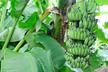
A delegation of Taiwanese experts in the cultivation of bananas has traveled to Honduras in a Technical Cooperation Mission with the objective of evaluating, and improving the conditions of the cultivation of this fruit in the country to prevent the entry of the Fusarium oxysporum race 4 tropical pest (Foc R4T), as well as to visualize possibilities of cooperation for this purpose.
The technicians held a meeting with the International Regional Agency for Agricultural Health (OIRSA) and members of the Honduran banana sector where they shared their country's experience in the management of this fungus.
"We have to implement the biosafety protocol through the specialized technicians of the Senasa, the Agricultural Protection Service of Honduras (SEPA), the OIRSA and, of course, heed the recommendations shared by Taiwan experts who have lived with this disease," said the Undersecretary of Livestock, Ruben Espinoza.
In turn, OIRSA's agricultural health officer in Honduras, Javier Velazquez, said that "we consider this fungus to be the biggest phytosanitary threat for the banana sector, which is why we are joining forces to reach more than 50,000 beneficiaries."
He added that the approach was aimed at prevention so that this disease does not reach any of the banana farms in the countries of the region, and that it was necessary that the responsible institutions together with the productive sector establish a monitoring process to minimize the risk of the introduction of the pathogen.
Taiwan is the country with the most experience in managing this disease, which was detected in 1967. In addition, it has resistant plant materials.
Source: latribuna.hn