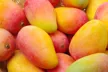
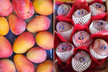
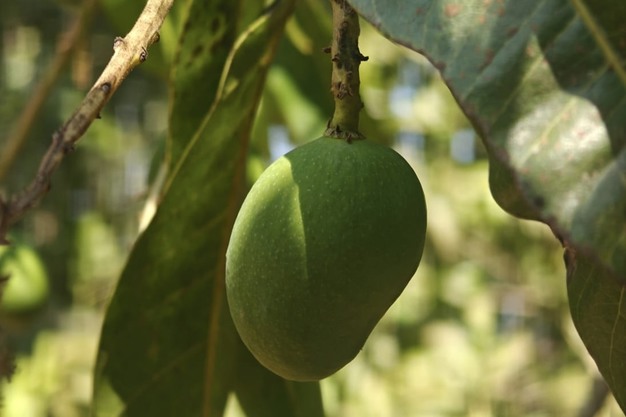
This year's Indian GI-tagged Alphonso season began on a notably slower note compared to last year, says Yashraj Phatak of Maharashtra-based ShivKonkan Farmer Producer Company and Shreevali Agro. "With barely 10% of the expected harvest reaching the market before the festival of Akshaya Tritiya mid-season, arrivals were extremely tight in the initial phase, and that pushed up prices sharply across both domestic and export channels."
Climatic irregularities across the Konkan belt limited fruit setting, keeping the season supply-constrained even as demand for authentic GI-certified Alphonso remained strong. Yashraj explains, "Once flowering and fruit set stabilised, arrivals increased, and exports accelerated after Akshaya Tritiya, moving into full commercial flow. Export programmes for GI-certified Konkan Alphonso ran strongly into premium, diaspora-driven destinations."
 © Sheevali Agro
At the same time, a growing flow of non-GI Alphonso lookalikes from other states, Karnataka, and Kerala intensified price competition. "The landing cost of authentic GI-certified Alphonso in many markets is almost equal to the retail price of non-authentic fruit," Yashraj mentions, noting that this has encouraged mixing and substitution, especially where buyers focus mainly on price.
Traditionally, India's main Alphonso outlets include the GCC, the UK, and Canada, backed by strong South Asian communities and relatively smooth import procedures. "This season, however, war-linked disruption and sharply higher air freight rates into the Middle East softened GCC demand. Exporters redirected more volume toward the UK and Canada, which offered more stable demand and better price realisation," Yashraj highlights, stating that in many ways, the UK emerged as the 'new Middle East' this year in terms of volumes absorbed and retail pull for Alphonso. By contrast, Japan-bound exports were almost at a standstill this season.
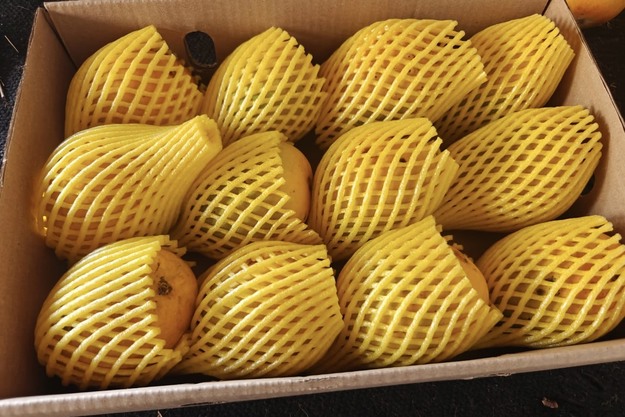 © Sheevali Agro
In the domestic market, supplies are now healthy, and prices have eased from early-season highs as the crop moved into full commercial flow. "As export volumes pick up, air cargo space becomes a bottleneck, with exporters competing for limited capacity and finding it difficult to secure space at short notice."
The Alphonso season is expected to taper off by the end of May or the first week of June, depending on the onset of the monsoon in western India. As Alphonso winds down, Yashraj expects the Kesar variety to take the lead from late May into June, supported by both domestic and export demand, while northern Indian varieties gradually fill the later window as delayed monsoons extend their harvests. ShivKonkan and Shreevali Agro remain heavily focused on GI-certified Konkan Alphonso, supplementing with Kesar, Badami, and Rasalu through affiliated farmer-producer organisations when importers request alternative varieties.
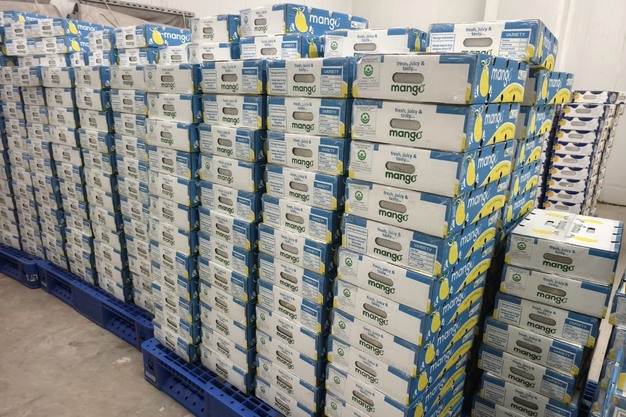 © Sheevali Agro
Yashraj stresses that, despite competition from origins like Mexico, Peru, Thailand, and Pakistan, demand for Indian mangoes, particularly Alphonso, remains differentiated. "There is a deeply emotional and seasonal connection that the global Indian diaspora has with Alphonso. Other origins may have logistical or pricing advantages, but the cultural and sensory premium attached to authentic Indian mangoes is very hard to replicate."
Shreevali Agro's shipments are active to the United States, Australia, and New Zealand, alongside at least one regular weekly consignment to GCC destinations despite the broader slowdown in Middle Eastern demand. Yashraj sees the broader Indian mango industry moving toward greater traceability, GI awareness, and origin integrity. "Going forward, it will be less about volumes and more about authenticity, compliance, and building consumer trust around GI-certified fruit," he concludes.
For more information:
Yashraj Phatak
Shreevali Agro
Tel: +91 86 52 786 572
Email: [email protected]
www.shreevaliagro.com