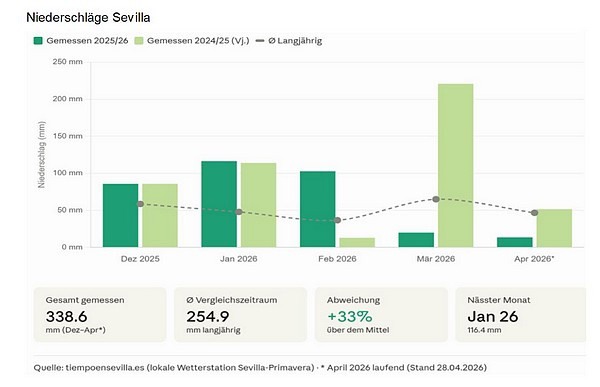
The 2025/26 Spanish early potato season has been marked by exceptional weather conditions: heavy rainfall last winter significantly delayed planting in the greater Seville area. Despite a subsequent favorable growing season, a scaled-back, delayed, and reduced harvest is therefore expected. Quality is expected to be good, adds Georg Kolmhofer, managing director of the Seville-based export company SESUR.
 © SESUR
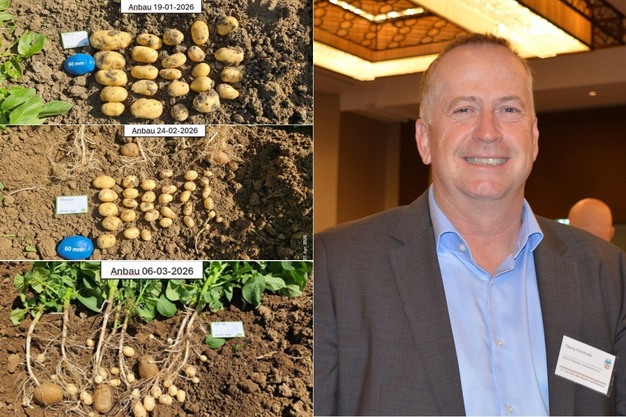
Exceptionally high rainfall in March 2025 ended a multi-year period of below-average water availability in Andalusia, leading to a structural improvement in the groundwater situation. In the short term, however, the rains caused significant problems with field emergence and the quality of the early production, Kolmhofer adds. "The rainy winter of 2025/26 made regular planting in the greater Seville area—usually between late December and mid-January—impossible. The planting material had been ordered on time but often had to be stored temporarily under suboptimal conditions, which in turn affected germination."
Most of the fields were planted with new planting material in early March. Starting in March, conditions became very favorable for vegetation growth. Kolmhofer: "The favorable growing weather partially compensated for the initial delay. So far, no significant disease pressure is apparent, which is a positive sign for quality development."
 © SESUR
Georg Kolmhofer was born in Austria and has been working in Seville, southern Spain, for many years.
Structural caution among producers
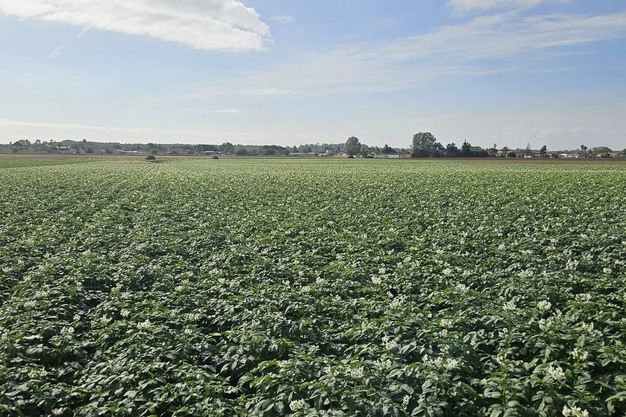
Cultivation areas were significantly reduced following the economically difficult season in the spring of 2024. The current area under cultivation is comparable to years when irrigation restrictions were in place—a strong indication of structural caution among producers, according to Kolmhofer, who focuses primarily on exports to Germany. Meanwhile, a noticeable structural shift is emerging, as Andalusian producers are increasingly shifting their marketing focus from exports to the domestic Spanish market. This is due, among other things, to the high quality requirements of the German food retail sector, the difficult logistics situation, and price reductions. The Spanish domestic market currently offers more attractive net prices and general terms. "This development will have consequences in the medium term for the security of supply of early potatoes from European cultivation to Central and Northern Europe."
 © SESUR
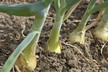
Insight into potato cultivation in southern Spain
Due to lower harvest volumes, delivery dates are expected to be pushed back by three to four weeks compared to normal years. The first deliveries of loose-skinned potatoes to German food retailers will therefore take place in week 20. Significant quantities of firm-skinned potatoes will be delivered no earlier than the end of May, followed by the seasonal peak in June. "The delay in Spanish deliveries coincides with a situation in Central Europe where substantial stock levels still exist, and imports from Egypt and Israel continue to influence the market. This mitigates the market impact of the delayed Spanish campaign." The progress of the domestic growing season in Germany and other EU countries is likely to be more decisive than the exact delivery date of Spanish potatoes, he added.
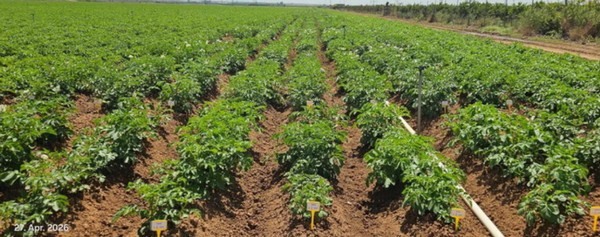 © SESURSESUR is also conducting variety trials for several European breeders during the current 2025/26 season. As part of these trials, the suitability of new breeding lines is being tested under the sometimes extreme conditions of the Mediterranean region—including cultivation under spring stress and variable soil conditions. The results so far are quite promising.
For more information:
Georg Kolmhofer
SESUR Semilla y Exportación SLU
Mob: +34 647 625788
[email protected]
www.sesur.net