During the first month of 2026, the Polish apple season already felt a bit calmer than usual. As of now, stocks are still relatively high for this part of the season, says Jan Nowakowski, manager of Polish apple distributor Genesis Fresh: "Since January, the season has developed in a rather mixed way. On the one hand, we have seen some improvement in pricing compared to the start of the year. On the other hand, the overall market situation is not as tight as many expected. Stocks across Europe are still relatively high for this time of the season. According to WAPA data, countries like Germany, Belgium, and the Netherlands are holding significantly more apples compared to last year, in some cases 30–50% higher. So while the market has improved slightly, it is not a situation of real shortage. It is more of a controlled market with still quite comfortable availability in Europe."
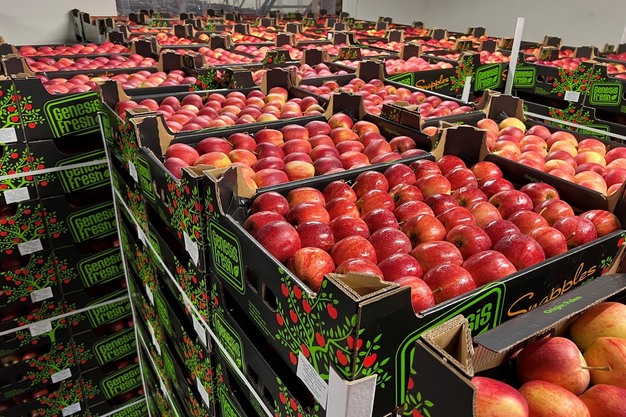
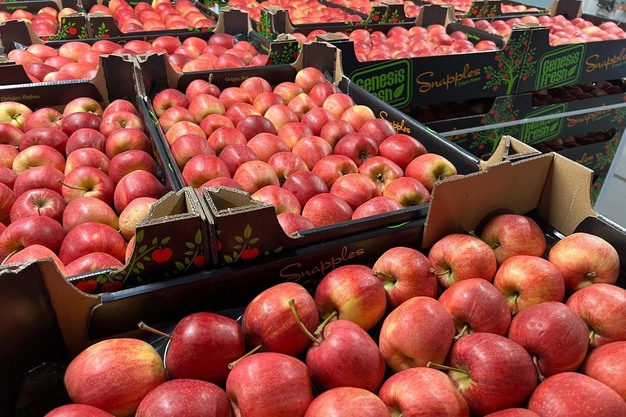
Availability remains relatively good, especially when looking at the European market as a whole, Nowakowski states. "In Poland, the picture is less clear, as stock data is not always fully transparent. However, we still have product available, and certain volumes continue to move to domestic markets and Eastern destinations. Varieties like Idared, Red Jonaprince, and Red Delicious are still widely available. Golden is becoming more limited in good quality, and Gala is mostly finished for export programs. Overall, availability is not tight; it's more about quality selection and matching the right specification to the right market."
 © Genesis Fresh
According to Nowakowski, demand is steady but not particularly strong: "Western Europe remains relatively weak in terms of imports from Poland. Many markets are still well covered with local or regional fruit, which limits opportunities. Scandinavia is stable, but volumes are slightly lower compared to previous seasons. At the same time, we continue to see movement towards Eastern Europe and some overseas markets, which helps to balance the situation, but it is not enough to create strong upward pressure on the market."
The conflict in the Middle East has had an impact on the apple season, but not directly on demand, Nowakowski emphasizes. "The conflict has mainly affected logistics and planning rather than demand itself. There is more uncertainty around shipping routes, transit times, and costs, which makes exporters more cautious. Some customers are placing orders more frequently but in smaller volumes, and overall planning horizons are shorter than before. So the impact is there, but it is more about operational complexity than a direct drop in demand."
 © Genesis Fresh
"For the remainder of the season, we expect a relatively stable but not very dynamic market. The high stock levels in Western Europe will continue to limit stronger price increases, while demand remains moderate. The key factor will be how quickly stocks are reduced in the coming months. If movement improves, the market could firm slightly, but at this stage, we do not expect any major shifts. Overall, it looks more like a steady, controlled end of the season rather than a strong finish," Nowakowski concludes.
For more information:
Jan Nowakowski
Genesis Fresh
Tel: +48 223 783 405
Email: [email protected]