The Department of Agriculture-Davao Region (DA-Davao), in partnership with the Department of Science and Technology (DOST), has started field testing preparations for AI-powered drone technology in banana farms in Davao del Norte. The project focuses on mapping plantations and detecting crop disease.
The pilot initiative, implemented with technology partner E-Support Link, covers three farms in Panabo City, Braulio E. Dujali, and Mabini. Drone AI has mapped five hectares of banana plantations as part of a year-long validation program.
Marie Ann M. Constantino, DA-Davao regional technical director for operations, said the project aims to support the banana sector through the use of precision agriculture tools to address production and disease management.
"This initiative forms part of DA-11's goal to help boost banana production by addressing challenges posed by crop diseases, including Fusarium wilt, which remains highly prevalent in many banana farms across the region," Constantino said.
The testing phase will continue for one year to expand research and generate data for production management. The drone AI system is targeting 95 per cent mapping accuracy and will undergo pilot testing in May. Drone-assisted plant counts will be compared with manual counts to verify precision. Disease detection trials are scheduled in the following months.
Farm owners involved in the program indicated that the technology could support monitoring, disease management, and production outcomes.
E-Support Link stated that drone AI can also reduce disease transmission by limiting human contact during inspections, counting, and monitoring activities that may contribute to contamination between plantations.
DA-Davao, through its Regional Crop Protection Center and Information and Communications Technology Section, is implementing the programS alongside DOST and local government agriculture offices.
The expanded testing follows a memorandum of understanding between DA-Davao and Japanese partners for an AI-powered drone pilot project focused on plant counting and early disease detection.
An earlier pilot test was conducted on March 30 at Laserna Farm in Ula, Tugbok District, Davao City, using AI-assisted multispectral drone imagery to identify infected banana plants and detect disease before visible symptoms.
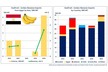
Davao Region produced 3.19 million tons of bananas in 2024, accounting for 94.8 per cent of the region's total fruit output. Bananas, including Cavendish varieties, remain among the Philippines' main agricultural exports, with export volumes projected to increase by 25.6 per cent to 2.93 million tons in 2025.
Source: SunStar