Apple production in India may extend beyond traditional regions such as Jammu & Kashmir and Himachal Pradesh, following early results from cultivation in Andhra Pradesh's Anantapur district.
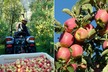
The KLD apple variety has adapted to local conditions in the drought-prone Rayalaseema region, where a farmer cultivated apples on 2.5 acres, equivalent to 1.01 hectares. Around 1,500 saplings were planted using a 12 x 6 spacing system, producing one ton of apples in the first crop. Saplings were sourced from Israel at approximately Rs 280 (US$3.4) per plant, with a total investment of Rs 4.2 lakh (US$5,050).
"Apple cultivation has emerged as a novel horticultural activity in select mandals of Anantapuramu district, with early-stage results showing viable fruiting, good taste, and market prices of Rs 120 to 170 per kg - significantly higher than what growers in traditional apple regions of HP and J&K typically realise at the mandi (market)," a government source said.
Apples from Anantapur have reached prices of up to Rs 170 per kg (US$2.05 per kg), compared to Rs 50 to 100 per kg (US$0.60 to US$1.20) for fruit from northern regions. Around 15 acres, equivalent to 6.07 hectares, are currently under apple cultivation across Garladinna, Kundurpi, and Peddapappur mandals.
The KLD variety offers earlier fruiting, with production beginning from the second year, compared to a gestation period of seven to eight years in traditional regions. A semi-high-density planting model allows up to 3,700 plants per hectare, compared to around 250 trees per hectare in Himachal Pradesh and Jammu & Kashmir.
Production estimates indicate yields of three to five tons per acre, equivalent to 7.41 to 12.35 tons per hectare, between the third and fifth year. At Rs 140 per kg (US$1.70 per kg), this could generate returns of Rs 4.2 lakh to Rs 7 lakh per acre (US$5,050 to US$8,420), higher than returns from groundnut cultivation.
The model also benefits from an off-season harvest window, with flowering in December and a different market timing compared to northern regions, where supply peaks between September and November.
Constraints include water availability, pest management, pollination, and agronomic knowledge. Apple is a water-intensive crop, requiring drip irrigation and access to borewells or ponds. Mites have been identified as a primary pest, while cross-pollination may require managed bee colonies.
Market sustainability is also a factor, as expansion in production could affect price levels. Growers may require further technical support, while extension services are currently limited for apple cultivation in the region.
Authorities are considering feasibility studies, demonstration plots, and support measures before scaling up production, with emphasis on documenting yield and quality over multiple crop cycles.
Source: Deccan Chronicle