South Africa's pistachio sector is expanding in the Northern Cape, with orchards developing across the Karoo alongside financing structures aligned with long-term crop cycles and export positioning.
At a growers' conference in Prieska, Karoo Pistachios and Fedgroup outlined plans to produce up to 60,000 tons annually and target 5% to 8% of global market share, positioning South Africa among the leading producers within the next decade. The company is scaling output from around 20 tons last year.
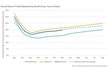
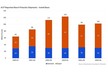
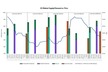
Global production remains concentrated, with the United States, Iran, and Turkey accounting for more than 85% of supply. Market data places the global pistachio market at R92.33 billion (US$5.49 billion), projected to reach R118 billion (US$7.02 billion) by 2031. South African prices track global benchmarks, with transaction values around US$36 per kg (R613 per kg) in early 2026.
Recent price increases have been linked to supply disruptions in Iran, while demand has also been supported by new consumption trends. "The situation in Iran helps us: prices are up a lot, and many importers are calling about supply chain diversification," said Karoo Pistachios CEO David Muller. "We're looking at holding back product and selling at a slightly higher price later in the year."
The Karoo provides heat, winter chill, low rainfall, and irrigation from the Orange River system. Muller said: "We have a counter-seasonal advantage, supply chain diversification, and a premium product."
Water management remains part of production planning. Muller said, "Water scarcity is a major constraint for all pistachio-producing regions in the world, simply because it's a desert plant. If you switch off the water, it won't thrive, but it will survive, and when water returns, you just keep going where you left off."
The shift towards pistachios is linked to diversification. "The current crop selection of farmers is running against the wall," Muller said. "People need to urgently diversify from corn and wheat, because we're not competitive on the world market, and climate change is making it more volatile."
Orchard development requires long-term capital, with breakeven around year eight and productive lifecycles extending beyond 50 years. Fedgroup structures funding around production cycles. Warren Winchester, Partner at Fedgroup Alternative Asset Management, said: "Our patient capital approach has been structured to align with orchard maturation cycles, seasonal variability, and long-term asset value creation."
He added, "We structure financial instruments that mimic the cash flow cycle and the value creation cycle of the underlying assets. You don't have to be paying back before the assets are actually producing the income."
Expansion plans include thousands of hectares, with 2,000 hectares requiring close to R1 billion (US$53 million) for planting, irrigation, and operations. Estimates indicate that 1,000 hectares could support around 800 direct and indirect jobs across farming, processing, and logistics.
The Karoo is currently the only region in Africa where pistachios have been proven to grow at scale. Developers are also working on outgrower models to expand participation. "We really have the opportunity here to give people who previously didn't have the opportunity to enter into anything like this," Muller said.
Future performance will depend on consistent yields, export quality, and positioning within global markets.
Source: Daily Maverick / Daily Investor