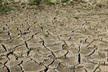
Henderson County in North Carolina is experiencing an extreme drought, affecting fruit and vegetable production. Apple grower Kenny Barnwell said young trees planted this spring are under pressure due to limited water availability. "I planted a lot of young trees (this spring), and we're irrigating where we can, and where we're not, I'm seeing some of them die just from lack of water," he said.
Irrigation capacity is limited. Barnwell estimates he can irrigate about 25 per cent of his orchard. "(Mostly) nobody's set up to do that, and on top of that, there's not enough water in the streams to do it," he said. A late freeze in March may have reduced the apple crop by up to 40 per cent, with drought expected to reduce output by a further 10 to 15 per cent. "We're getting into a pretty desperate situation," he said.
Vegetable growers are delaying planting due to dry soil conditions. Andrea Ashby of the North Carolina Department of Agriculture said, "If you put seed into dry soil, and we don't get some moisture before long, those seeds just won't germinate." Planting windows remain limited, particularly for crops that need to be established before the summer heat.
Mills River grower Jason Davis said early-season planting is critical. "You want to get those row crops (sprouted) out of the ground, get them established, in April and May before you get into the summer heat."
Parts of Henderson, Transylvania, and Buncombe counties, along with all of Haywood County, are classified under extreme drought conditions, while most of the state is under severe drought, according to data from the University of Nebraska-Lincoln. Around 9.5 million people in North Carolina are in drought-affected areas.
Meteorological data shows the drought ranks fourth on a scale of one to five. Rainfall forecasts indicate up to 0.5 inches in the Asheville area between April 24 and 28. However, estimates suggest that between 8 and 13.5 inches of rainfall are needed to reduce the deficit.
Terry Kelley of the North Carolina Cooperative Extension said the impact will increase as planting progresses. "It's not hurting us terribly yet, because we don't have that many crops in the ground. But when we start planting stuff, you will need some soil moisture to get those seeds to germinate."
Agricultural economist Jeffrey Dorfman said the outcome remains uncertain due to weather dependency. "We're just going to have to wait a couple of months to see how much rain we get," he said.
Source: Times-News