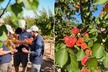
Frost and low temperatures have affected orchards in Latvia, with damage reported in sensitive crops such as peaches, apricots, and other stone fruits. Conditions in Zemgale included extended periods of low winter temperatures, affecting bud development and tree health.
Researcher Ilze Grāvīte from the Dobele Horticultural Institute said frost damage is visible in buds that have not opened. "These buds have definitely been damaged by frost, which is why they aren't opening. Look, this is what a swollen bud and a leaf bud look like. And these here look like the woody part has likely been damaged. Look, I'll snap it off, and it's already turned brown."
Sweet cherry buds have also been affected, while apricots and peaches show higher levels of damage. "In most orchards, the peaches have frozen all the way down to the snow line. At the institute, too, we managed to get 100% of them, to use the gardeners' lingo, to set them down to the snow line, hoping that maybe something will grow from the dormant buds."
She added that apricot trees show mixed results. "Well, as for the apricots, if we take a look, we see that some buds are starting to swell and perhaps begin to form, but the tips of the branches have also turned black. That means the frost has done its damage, but, well, we'll wait and see."
Plums and cherries have performed differently depending on the variety, with some parts of the trees remaining viable. Grāvīte noted that winter conditions were the main factor in the damage, while current soil moisture levels remain adequate despite a relatively dry spring.
Growers are advised to delay pruning to reduce additional stress on trees. "This is the kind of spring when you can't rush into pruning. And especially stone fruit trees, including pears and apples, which, although they are very common fruit trees in Latvian conditions, those varieties that aren't of local origin definitely have damage."
At the Dobele Horticultural Institute, breeding programs are focused on developing fruit tree varieties with improved resilience to temperature variation, drought, and humidity. The development of new varieties can take up to 20 years.
"And, of course, ideally, we choose as parent plants those varieties that have been in Latvia for a very, very long time. But the fact that there is a challenge with the climatic changes occurring over the years makes this, of course, quite difficult to predict."
Researchers also note that climate variability is affecting pest and disease dynamics, as well as winter hardiness across regions.
Source: LSM