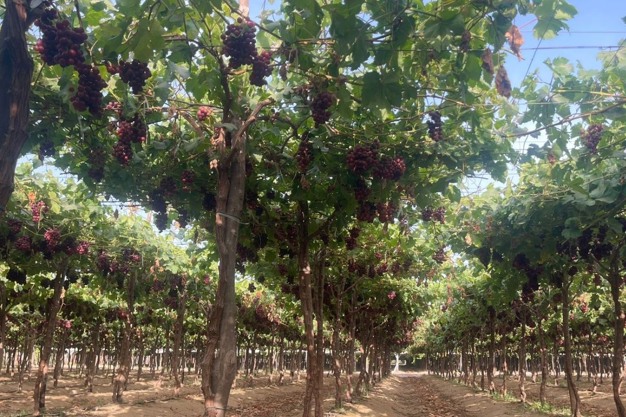
A new export season for Egyptian table grapes has just begun. This season is marked by shifts on several fronts: variety selection, packaging, and competitiveness. "This reflects the ongoing development of the table grape sector, with notable changes driven primarily by market demands rather than by production expansion alone," explains Mohammed Ezzat, CEO of Green Nile.
Ezzat notes that overall production volumes are higher than in previous seasons, thanks to the gradual expansion of cultivated areas and improved agricultural practices in various regions. However, the exporter emphasizes that the share of production meeting export standards is a more important factor to monitor than the increase in overall volumes. He explains: "While more grapes are available on the market, the share that fully meets strict export requirements, particularly for European retail programs, remains relatively tight. This situation leads to more selective buying behavior and early price sensitivity for standard grades, while the premium quality segments maintain greater stability. Based on what we're seeing on the ground, the market is becoming increasingly segmented, and a focus on quality now plays a more significant role than mere availability."
 © Mohammed
According to Ezzat, export readiness also affects variety selection. He adds: "This season, there is a clear trend toward seedless varieties and those that better meet European retail standards in terms of visual appeal, shelf life, firmness, and logistics performance. Traditional varieties are still present, but their role in export programs is gradually shrinking, primarily because market requirements are becoming stricter and less flexible than they were in the past. What's changing this season is that variety choices are no longer dictated solely by crop yield or growers' preferences, but by commercial acceptance in destination markets."
Adapting to market needs is also taking the form of more practical packaging. Ezzat explains: "We are seeing a clear increase in demand for ready-to-sell formats, custom packaging solutions, and private-label programs, particularly from European buyers who place greater importance on shelf presentation and the consumer experience. At the same time, packaging decisions are increasingly linked to logistics performance, particularly maintaining cold chain integrity and reducing handling risks during transport.
One of the most visible shifts, initiated several years ago and becoming more pronounced with each passing season, is the trend toward an early start to the season. "Competition is intensifying among Egyptian exporters and with other countries of origin. To maintain a competitive edge in key markets, it is essential to gain rapid market access. This gives Egyptian grapes a very favorable seasonal positioning window, particularly in European markets. "
Once early market access is secured, competitiveness depends on maintaining good value for money and predictable logistics, Ezzat says. "Egyptian grapes still offer an excellent balance between cost and acceptable export quality, particularly for high-volume programs. However, competition is no longer primarily about availability or price. It is increasingly determined by consistency, compliance, and reliability. That's perhaps the most important market shift that we notice this season, and that's a sign of a maturing industry.
Today, buyers are focusing more on the predictability of performance throughout the supply chain, from farm to final destination. From a practical standpoint, the market is clearly moving toward a model where it is easier to enter, but where maintaining and growing your business depends on consistency. In other words, early access allows you to enter the market, but it is consistent quality that keeps you there," the exporter concludes.
For more information:
Mohammed Ezzat
Green Nile Egypt
Tel: +20 10002 85606
Email: [email protected]
www.greennile-eg.com