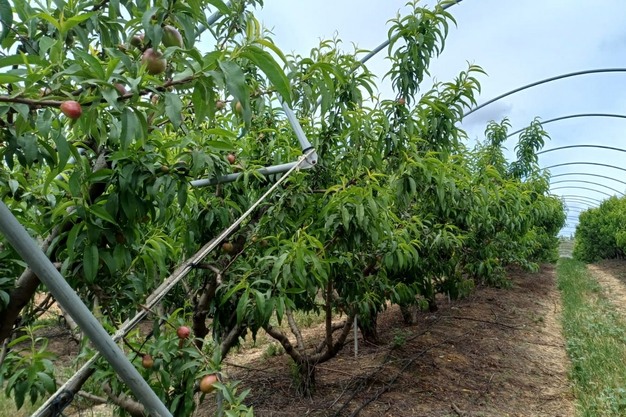
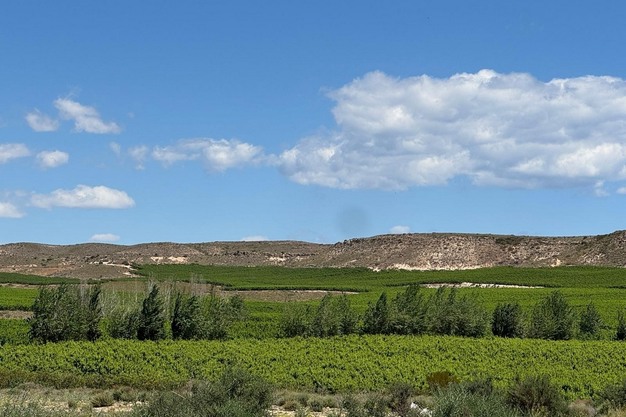
The Spanish stone fruit season is getting off to a good start this spring. The relatively cold, wet, and blustery spring has actually had a positive effect on the peach and nectarine trees. Thanks to the rain and cloud cover, the trees were able to make particularly good use of the high number of cold hours. "This has led to good flowering and fruit set in the main growing regions," says Nico Veldhoen, the purchasing manager responsible.
The first volumes from southern Spain are again expected between late April and early May. This marks a normal start. As things stand, a stable season is also expected to continue.
 © Staay Food Group
Cultivated area: growth in flat nectarines
Within production, the rise of the flat nectarine (platerina) is a clear trend. This variety is gaining ground across Europe with increasing demand from the retail sector, thanks to its distinctive appearance, good flavour profile, and ease of eating (similar to the flat peach). Growers are further expanding the acreage, meaning availability is expected to grow in the coming years.
At the same time, there is renewed interest among growers in traditional peaches. Growers are once again opting more frequently for peach varieties due to their better resistance to cold, wind, and pests, which ensures stable production and thus lower cultivation risks. This is resulting in a slight increase in the area under peach cultivation, following years in which nectarines have become increasingly dominant.
 © Staay Food Group
"If these trends in cultivation continue, this will certainly affect our sales. Among our customers, we have seen a sharp decline in the share of peaches in recent years (halving over the last four years to 10%), whilst the share of flat nectarines did not exceed 2% last season," says Marketing Manager Mark Loojenga.
 For more information:
Mark Loojenga
StaayFoodGroup
Tel: +31 180 679 179
Email: [email protected]
www.staayfoodgroup.com