Ceasefire talks that could have led to a partial reopening of the Strait of Hormuz collapsed late last week, followed by a US naval blockade of Iran-linked traffic. Limited vessel movement through the Gulf is unlikely to resume at scale until conditions stabilise.
The closure has reduced global oil supply by 10%, with further pressure from the blockade. Some countries are already taking measures to conserve fuel stocks. For container shipping, the main impact is on fuel cost and availability. Reduced bunker fuel supply in parts of Asia is leading some vessels to divert to alternative ports, increasing fuel consumption.
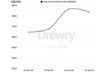
Fuel costs are affecting freight rates across multiple lanes. Emergency Fuel Surcharges and Peak Season Surcharges of US$500 to US$1,000 per FEU introduced in March are now in effect. Transatlantic rates increased by 50% last week, rising from US$1,400 per FEU to over US$2,100 per FEU. Additional increases of US$1,000 to US$2,000 per FEU are planned for Europe to North America routes.
Transpacific rates to the West Coast increased by 3% to about US$2,500 per FEU, while East Coast rates rose 10% to US$3,678 per FEU, both about US$700 per FEU above pre-conflict levels. Carriers are targeting further increases of US$500 to US$2,000 per FEU in early May, although maintaining these levels may be challenging.
Asia-Europe rates have increased by US$200 to US$400 per FEU. Rates to Northern Europe declined 4% to US$2,800 per FEU last week, while Mediterranean rates held at US$3,800 per FEU. Both remain about US$1,000 per FEU below the general rate increases set earlier in the year.
The National Retail Federation expects stable US import volumes through June, followed by a 5% increase from July. Total volumes through August are projected to be 3% lower than last year. Current projections indicate limited frontloading ahead of potential tariff increases.
In air cargo, fuel supply constraints are also affecting capacity. The Middle East accounts for about 20% of global jet fuel supply, with prices more than doubling since the closure. Countries dependent on Gulf fuel or Chinese refineries are implementing conservation measures.
Vietnam and Myanmar report supply shortages, with Vietnam Airlines cancelling 20% of flights and Cathay Pacific planning a 2% reduction from mid-May. European markets could face similar constraints, while North American carriers are adjusting capacity due to higher costs.
Flight activity in the Middle East remains about 60% below pre-conflict levels. Reduced passenger flights are limiting cargo capacity. Freightos Air Index rates for South Asia to Europe reached US$5.15 per kg, double pre-conflict levels, while Southeast Asia to Europe rates rose to US$5.30 per kg. China to North America rates remain at US$6.30 per kg, around 7% above late February levels after peaking in March.
Source: Container News