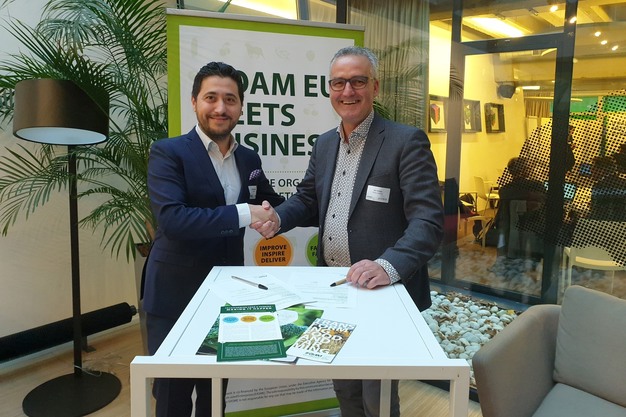
The European organic sector has developed significantly over the past decade. What was once seen as a niche is now, according to Eduardo Cuoco, a full-fledged player within the food system. He recently marked his ten-year anniversary as director of IFOAM Organics Europe and, in that role, has been at the heart of this transformation.
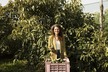
 © IFOAM Organics Europe
He sums up the past ten years in one word: "maturity." "I think we as a sector have become more mature," Eduardo reflects. "For years, we grew almost automatically. It was relatively easy. Now we are a sector that thinks more about itself and makes more deliberate choices."
Growth shaped by crises
This development did not come without challenges. According to Eduardo, the sector has been shaped by a series of external shocks. "The past ten years have been marked by several crises: the COVID-19 pandemic, the war in Ukraine, and more recently tensions around the Strait of Hormuz."
These events forced the sector to take a more critical look at itself. "The question became: can we scale up sustainably? And how do we deal with a period in which growth is no longer a given?"
At the same time, he also sees a positive effect. "From an agronomic perspective, we are more resilient. We use less fertiliser and pesticides, so we are better able to cope with rising costs. But in other respects, we are just as vulnerable as the rest of the sector."
From regulation to a broader policy role
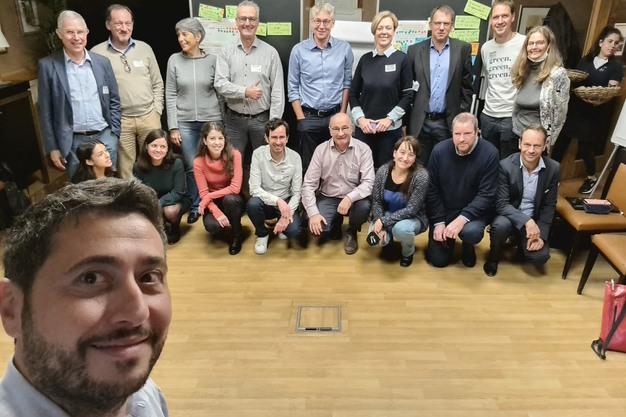
Under Eduardo's leadership, the organisation's role has also expanded. "When I started, we were five people, and the focus was mainly on regulation. Now we are around 35."
This growth reflects a broader shift. "It is no longer only about organic regulation. It is about the contribution that organic can make to European policy. We have a seat at all relevant policy tables."
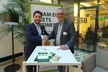
 © IFOAM Organics Europe
Organic farming has thus secured a structural place in agricultural policy. "We are no longer a small niche of a few farmers, but part of the agricultural system."
A key milestone in this regard was the European Green Deal. "We made sure that organic is not only seen as a production method, but also as a policy tool."
More than just the environment
One of the key lessons of the past ten years, according to Eduardo, is that the sector needs to position itself more broadly. "We must always look at organic from a 360-degree perspective. Too often, the focus is only on the environment. The risk is that we are seen as purely a 'green' solution. But we are much more than that."
He points to social and economic impacts. "Organic performs well in generational renewal. It attracts more young people and more female entrepreneurs."
In addition, he says, organic farming strengthens rural areas. "We contribute to strong local supply chains, allowing people to live and work in rural regions."
He also sees economic benefits. "There are studies showing that organic farmers can, on average, have better net incomes than conventional farmers."
Growth: a combination of policy and market forces
According to Eduardo, the growth of the organic sector is driven by a combination of factors. "It is a combination of push and pull factors. Political support is essential, but you also need consumers who buy organic products."
During periods of high inflation, he observed changes in consumer behaviour. "Consumers still wanted to buy organic, but they started looking for cheaper options." This, he says, requires clear communication. "We need to show that the higher price of organic also delivers a societal return."
Public procurement as a lever
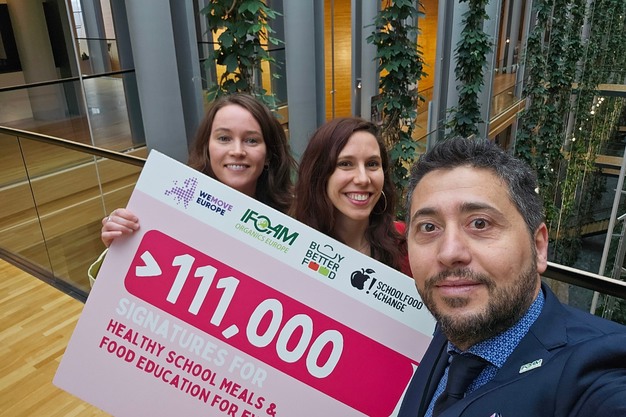
One important growth opportunity, according to Eduardo, lies with governments themselves. "Public procurement is the only part of the market that can truly be steered directly by policy."
He calls for concrete targets. "We want a minimum percentage of organic products in public catering, such as schools and canteens."
 © IFOAM Organics Europe
The impact could be significant. "We estimate that a 10% increase in organic in public procurement could generate substantial market growth, potentially reaching the billion-euro range at the EU level, by stimulating wider demand and supply-chain expansion. FAO-based estimates further suggest that a 10% shift in demand towards organic in the EU could create approximately 44,000 additional jobs."
This is not only about product substitution, but he adds. "It is about a broader transformation: less food waste, more seasonal products, and better nutritional balance."
No longer a niche
Outside the sector, organic is still often seen as a niche, but according to Eduardo, this perception is outdated. "We are out of the niche. And we need to act accordingly."
With more than 10% of agricultural land in Europe now organic, he sees it as a serious force. "We are ready to scale further, as long as we maintain our principles."
At the same time, he notes differences between countries. "In countries like the Netherlands, there is still significant growth potential. In Italy, production is strong, but domestic consumption can still grow."
No one-size-fits-all
On farming practices, Eduardo calls for nuance. "There is no one-size-fits-all solution." He points to the debate on no-till farming as an example. "It is often seen as the solution, but in conventional farming it can sometimes involve increased use of crop protection products."
Agriculture, he says, requires a tailored approach. "Farming is location-specific. Even within a small country like the Netherlands, conditions can vary significantly."
This also requires flexibility in policy. "We need harmonised rules, but with room for local adaptation."
Innovation as a driving force
Innovation remains a key pillar of the organic sector. "Organic is by nature innovative. Farmers have deliberately chosen fewer inputs, which means they had to develop new solutions."
Within his organisation, several innovation projects are underway. "We are working on everything from seeds to drones and digital technologies." He stresses that these innovations should also be broadly applicable. "Solutions developed for organic can often be applied in the wider agricultural sector as well."
The future: staying relevant
Looking ahead, Eduardo sees clear challenges. "We need to remain relevant, especially for younger generations."
He also warns about greenwashing. "There are actors who present themselves as greener than they are. We must continue to call that out. We cannot be overshadowed by companies with large marketing budgets claiming to be green, while the truly green organic sector is being pushed into the background."
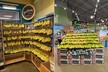
 © IFOAM Organics Europe
The sector, therefore, needs to improve how it tells its story, he says. "We must keep explaining why organic is the right choice."
Regional development and bio-districts
An important concept for the future, according to Eduardo, is that of bio-districts. "These are regions where organic farming is the driver of broader economic development."
This approach strengthens local systems. "It brings farmers closer to other sectors and makes rural areas more resilient."
Leadership and motivation
Looking back, he acknowledges that mistakes have been made. "But as a team, we have learned from them." He stresses that his work depends entirely on collaboration. "The success of an organisation is never an individual success, but the result of teamwork."
For him, leadership is about cooperation. "Leadership means creating an environment where people feel safe to collaborate and share ideas."
His personal motivation is clear. "It is my mission. Organic farming is my way of contributing to change."
"We have deliberately chosen a more difficult path in the organic sector than conventional agriculture, by farming without inputs such as fertilisers and chemical crop protection products," he concludes. "That requires an innovative approach. And it serves a greater purpose: a healthy planet and a healthy society. That is what it is all about for us."
For more information:
Eduardo Cuoco
IFOAM Organics Europe
Rue Marie Thérèse 11
1000 Brussel, België
Tel: +32 (0) 2-2801223
[email protected]
www.organicseurope.bio