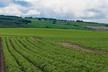
Potato production in Argentina, particularly in Buenos Aires province, is operating under tight margins as production costs exceed market returns.
In 2025, producers faced oversupply due to weak domestic sales and reduced exports. Brazil, a main export destination, shifted sourcing to Europe, adding pressure to the Argentine market. Surplus volumes were redirected to the fresh market, contributing to lower prices. "A lot of potatoes were thrown away last year. We had to plow hectares," said Sergio Costantino of Argenpapa.
Production costs in southeastern Buenos Aires are estimated between US$10,000 and US$12,000 per hectare, including inputs, marketing, and freight. Current market prices remain below these levels. Potatoes are selling for 8,000 to 9,000 pesos per bag, equivalent to around US$0.25 to US$0.26 per kilogram, compared with an estimated production cost of US$0.36 per kilogram.
"If you compare it to the historical average, we're almost at the same cost as what we receive in the market," Costantino said. "Right now, we're receiving 26 cents."
Over the past ten years, average prices have been around US$0.34 per kilogram, with a peak of US$0.52 in 2023 and a low of US$0.15 in 2025. Current pricing levels leave producers at break-even or negative margins.
The planted area for the current season is estimated between 30,000 and 34,000 hectares, following higher levels in previous years. Harvest activity is concentrated between March and April, increasing supply and placing pressure on prices during this period.
Domestic consumption remains stable at 45 to 50 kilograms per capita annually, limiting demand growth. "People aren't eating more," Costantino said. Economic conditions are also affecting sales. "Every adjustment is hurting us."
Input costs continue to increase, including fuel, freight, and fertilisers, while access to financing remains limited. "Producers don't have access to loans with low interest rates," Costantino said.
Export dynamics remain linked to Brazil. Around 80 per cent of industrial production is directed to that market, but competition from European suppliers has reduced competitiveness. "With this dollar exchange rate, we couldn't compete," he said.
Buenos Aires province accounts for 55 per cent of national production and up to 90 per cent of supply in certain months, amplifying market movements. Most producers operate on rented land and follow crop rotation cycles, limiting short-term adjustments in planted area.
"The current situation is one of uncertainty," Costantino said.
Source: pagina12.com / Argenpapa