California agriculture has experienced a sharp decline in exports to China following changes in trade policy, highlighting the sensitivity of global market access for export-oriented crops. New research by agricultural economists shows that the total value of the top 13 California agricultural commodities exported to China fell from an average of US$1.55 billion to US$554 million in 2025, a decline of 64% in one year.
China had developed into one of California's main export markets after joining the World Trade Organization in 2001. Shipments of almonds, pistachios, dairy, cotton, and fresh fruit increased over two decades, supported by growing demand and investment in export infrastructure.
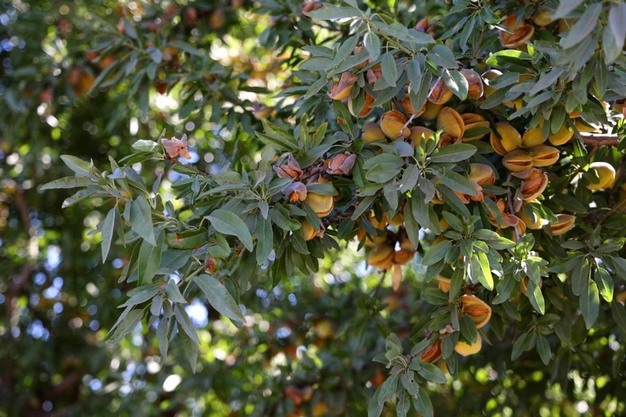 © UC Davis
This trajectory shifted following earlier trade tensions in 2018–19 and further tariff measures introduced in 2025. Retaliatory tariffs were applied to multiple agricultural commodities, reducing market access and affecting export volumes and values.
Tree nuts recorded some of the largest declines. Pistachio export value to China decreased by approximately US$478 million, while almond exports declined by around US$228 million. Export volumes also fell, with almond shipments down about 77% and pistachios by 84%. Other commodities, including cotton, fresh grapes, strawberries, oranges, and processed products, also recorded reductions, reflecting broad trade diversion toward competing suppliers.
At the regional level, export losses were concentrated in key producing areas. Fresno County recorded estimated losses of around US$246 million, while Kern County saw approximately US$238 million in reduced export value. These impacts extended beyond growers to logistics, processing, and handling sectors linked to agricultural exports.
While some trade flows were redirected to alternative markets such as India, the Middle East, Southeast Asia, and Latin America, these markets often involve different regulatory requirements and lower price points. Adjustments included changes in logistics, contracts, and compliance with new market standards.
At the farm level, reduced exports have placed pressure on prices and marketing options, particularly for perennial crops with long production cycles. Tree nut orchards and other fixed investments cannot be adjusted quickly, limiting short-term responses to market disruptions.
"Long-term trade relationships are fragile," said Sandro Steinbach. "Trade policy shifts can easily destroy more than they protect."
Colin Carter added that even temporary market disruptions can have lasting effects. "Rebuilding lost trust and market share will take years, if not decades, and would likely require hundreds of millions of dollars in market development efforts."
For more information:
Ria DeBiase
College of Agricultural and Environmental Sciences
Tel: +1 530 752 3508
Email: [email protected]
www.caes.ucdavis.edu
Giannini Foundation of Agricultural Economics, University of California
Email: [email protected]
www.s.giannini.ucop.edu