Purple artichoke production in the province of Foggia, and more precisely in the Capitanata district of Puglia, has suffered a series of forced stoppages due to extreme weather conditions. The most critical event, a severe frost, occurred on the night between 31 December and 1 January, compromising part of the fields. Further frosts in January and February slowed down the vegetative recovery of plants. Moreover, the sector is still suffering from the negative effects of the severe drought recorded in 2025. As if this were not enough, a violent hailstorm hit the area at 4.30 p.m. on 14 March 2026.
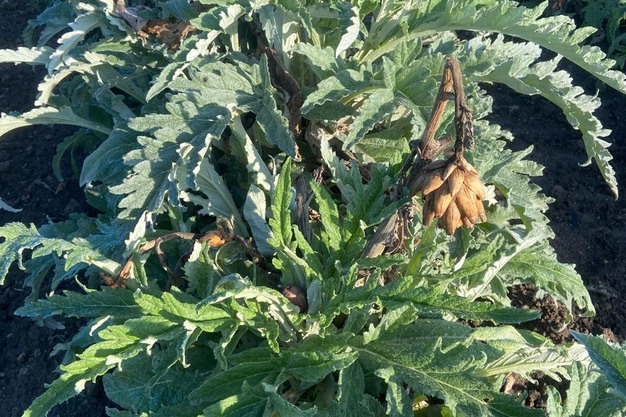 © Giuseppe Bracone
Artichokes hit by frost
"Despite the delays, our production has resumed vigorously in recent weeks," says Apulian artichoke grower Giuseppe Bracone. "The fields that had survived the frost at the beginning of the year were starting to produce artichokes of almost excellent quality, although it remained difficult to select aesthetically impeccable products for the most demanding markets."
"With Saturday's hailstorm (14 March 2026, ed.), we lost at least 2-4 flower heads per plant. Usually, you can get as many as 10 per plant. Now we have to wait for the vegetative recovery, if there will ever be one. The product without leaves and with damaged stems will be delivered early to the processing industry. This will result in a lower supply for the fresh market," explains Bracone.
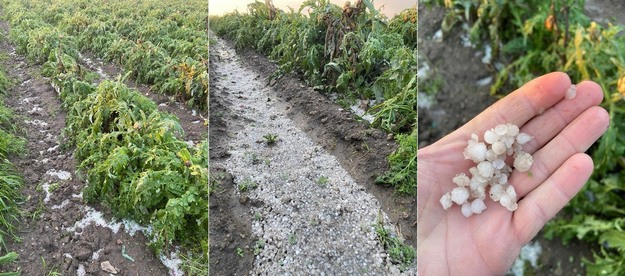 © Giuseppe BraconeHail in artichoke fields on 14 March 2026
In the meantime, the delay in production has opened the door to import flows, which are providing big retail chains and wholesale markets with continuous and visually standardised supplies. The main factor distorting the market is the massive import of artichokes from Egypt, which arrive in southern Italian ports by container.
"Egyptian artichokes are dominating several channels. Their presence is reported in big retail chains, often sold in bunches of 3-4 pieces, and in the main wholesale markets in Campania and Apulia. On arrival, the stalks of about 10 cm are defoliated, and the product is placed in plastic crates that hold 30 pieces. The artichokes boast a deep purple colour and an extremely uniform appearance. Their journey in the containers can take up to a week, so a question arises: what will be used to preserve the firmness of the leaves and the colour of the stalk, thereby avoiding the blackening that usually strikes the fresh product after 4-5 days?" asks Bracone.
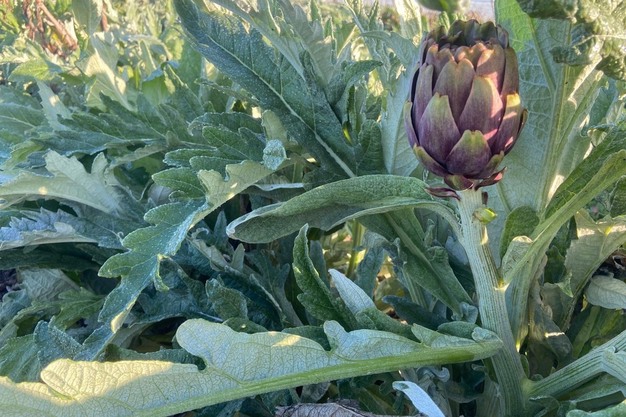 © Giuseppe Bracone
Purple artichoke from the province of Foggia, currently in the field
According to the Apulian producer, the commercial situation appears increasingly critical due to the collapse of the wholesale prices. "The sales price is currently between EUR 0.15 and EUR 0.30 per head, with an average value of around EUR 0.20 prevailing. However, logistics and handling costs alone already account for around EUR 0.15 per head. The residual margin for producers is practically nil, and this is without considering production costs. The situation is made even worse by the presence of the Egyptian product, sold at wholesale prices of between EUR 0.20 and EUR 0.30 per head: a level that encourages retailers and street vendors to prefer it over the domestic product, which is perceived as less attractive from an aesthetic point of view," explains Bracone.
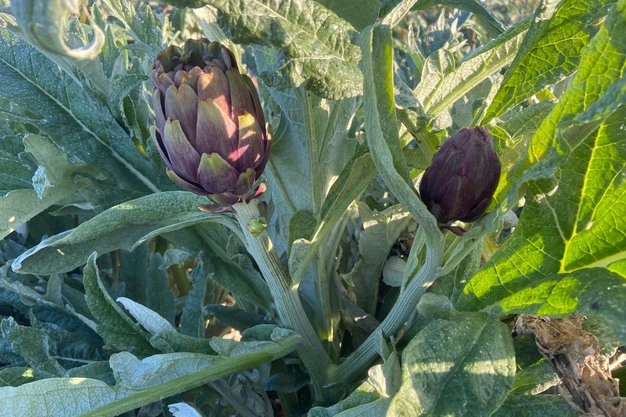 © Giuseppe Bracone
Purple artichoke from the province of Foggia, currently in the field
"We are looking to the coming months with concern. A strong demand for fresh artichokes is expected until Easter, but, considering the latest hailstorm, the hope of being able to compete with foreign imports, also in terms of product presentation, seems increasingly distant. From mid-April onwards, production usually shifts to the processed industry (artichokes in oil, pesto, pizza toppings), but there is still growing concern about the import of semi-finished products in drums, from Egypt and Tunisia." The producer also points out the problems caused by the ongoing conflict in the Middle East. "We have to deal with the price increase of fuel for agricultural use and the increase in all nitrogenous fertilisers."
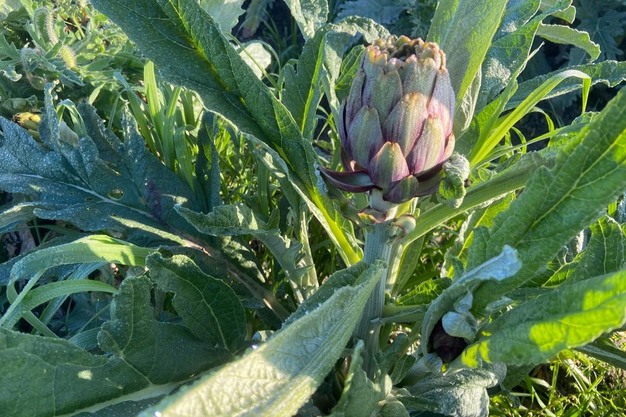 © Giuseppe Bracone
Purple artichoke from the province of Foggia, currently in the field
"My colleagues and I find ourselves having to fight an uneven battle. On the one hand, we must comply with strict production specifications and manage climatic crises, and on the other, we are competing with a foreign product that focuses on aesthetics and low cost. The current challenge concerns not only production, but communication: we have to make the market understand that aesthetic beauty, which is often artificially preserved, does not necessarily coincide with organoleptic quality and food safety, which are aspects our Italian artichokes, as well as all Italian fruit and vegetables, can be proud of," concludes Bracone.
For more information:
Giuseppe Bracone
+39 328 0227382
[email protected]