Rising tensions between the United States and Iran are having direct consequences for European cargo flows towards the Gulf region and the Far East. The blockade of the Strait of Hormuz has immediately halted all sea freight shipments to Gulf countries.
"Right now, everything is basically on hold. Shipments have been halted. Nothing is moving in that direction for the moment. Ships that were already en route are being diverted and containers unloaded elsewhere. What happens to those cargoes next is uncertain. That leads to additional costs and logistical complexity," explains Marc Evrard of Belgian Fruit Valley, which exports large volumes of pears to Asian markets.
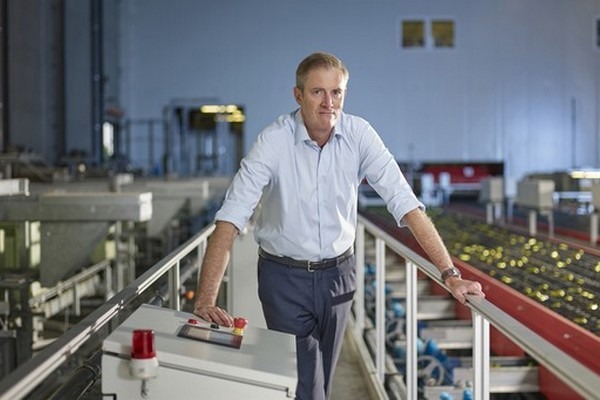
Marc notes that the sector was already under pressure. "The sea freight market was already struggling with limited operational control at various shipping companies. Now the disruption is only getting worse: sailing schedules, capacity, and transit times are completely shifting. The model that was workable until recently is now under severe pressure."
Seasonal pressure on top of logistical chaos
For BFV, this crisis comes on top of an already busy season for apples and pears. "We were already dealing with quality problems in pears due to substantial transport delays. And now this situation comes on top of that. First of all, we should say that the human situation there is, of course, the most difficult, but the new circumstances do not make things any easier."
The impact is far-reaching. "A shipment that was originally destined for, say, Abu Dhabi or Saudi Arabia may now be unloaded in Sri Lanka, India, or another port. Often, the proper documentation required to import the product further is missing, meaning a shipment cannot reach its destination. In practice, you can do very little with it, and it can effectively be considered lost. This affects not only us. Products are shipped to that region from across Europe, South Africa, and also East Africa, for example. The Middle East has traditionally been an important market. If that route disappears, it will have a major impact on the entire logistics chain. That is quite dramatic."
Refocusing for the time being
Marc expects the uncertainty to continue for the foreseeable future. "Ships that normally unload in the Middle East and then load cargo elsewhere can no longer follow their schedules. Everything is shifting. It will create a major disruption. It does not look as though this problem will be resolved quickly, either. For the time being, we will have to reorient ourselves and look at what is still possible, such as selling more within Europe or exploring routes via the Cape of Good Hope for exports to China. In any case, it will not be easy, but we will have to get through it. Everyone in the industry feels that this is an unprecedented situation."
For more information:
Marc Evrard
Belgian Fruit Valley
Tel: +32 1169 3411
[email protected]
www.bfv.be