"The Middle East conflict currently has mainly two effects on the fresh produce market," Rogier Rook and Patrick Thierrij, respectively supply chain director and account manager overseas at Valstar, explain.
"On the import side, it mainly concerns sea freight from Asia and Africa. Those supply chains had only recently begun to slowly normalise after a prolonged period of disruptions, but due to the current situation, we are again seeing potential delays and uncertainties. Shipping companies that had just resumed routes through the Strait of Hormuz are now abandoning them and once again taking the longer route, which leads to unpredictability and delays in arrivals. Whereas we initially expected normalisation this year, developments are now again extremely uncertain and unpredictable," Rogier says.
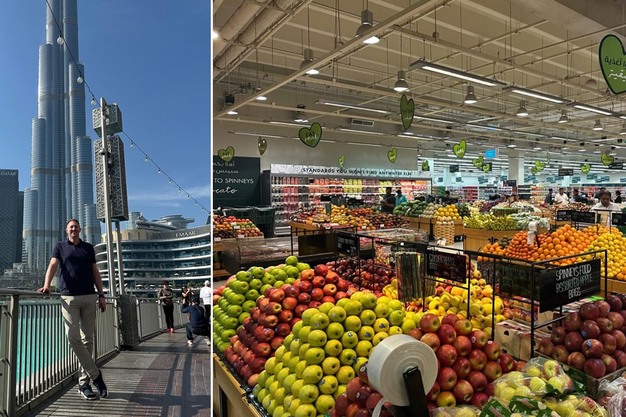 © FarmHouse International bv (Best Fresh Group)Patrick Thierrij was recently visiting clients in the Middle East
"On the export side to the Middle East, we actually experienced a short period of complete disruption last weekend. Air freight connections temporarily stopped or were severely restricted, directly affecting export flows," Patrick recalls. "In the meantime, logistics are cautiously picking up again, but finding sufficient capacity to supply our customers remains a challenge. Freight capacity is very limited, so schedules can change quickly. Due to the rapid, often daily developments, it can also happen that last-minute departures ultimately prove impossible. It requires constant last-minute adjustments and a great deal of operational flexibility to continue serving our customers."
"For now, the situation mainly requires a great deal of logistical skill and improvisation, and it is currently unclear within what timeframe we will begin to see improvements. For the moment, it remains a matter of daily monitoring, maintaining close communication with suppliers and customers, and responding to the evolving situation."
 For more information:
Rogier Rook / Patrick Thierrij
Valstar
Tel: +31 174 47 9111
[email protected]
[email protected]
www.valstar.com