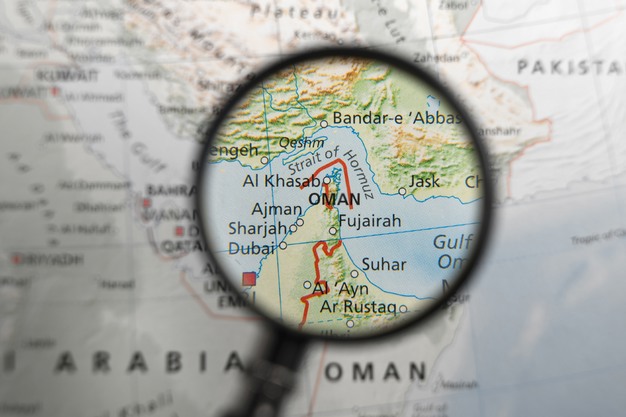
The current geopolitical situation affecting maritime routes in the Middle East poses a critical threat to Italian fruit and vegetable exports, particularly for the apple sector. Today's situation is described as worse than the previous disruptions related to the conflict in Gaza, due to the instability that now involves not only the Red Sea, but also the Strait of Hormuz. The closure, or the high risk of transit, has led shipping companies to suspend transport to ports in the Upper Gulf. Saudi Arabia - one of the top five strategic markets for Italian apple exports overseas - is difficult to reach, putting cargoes en route and those planned for the spring months at risk. Companies face soaring insurance and logistics costs, with the real possibility of having to return goods to the point of origin to avoid total loss of the product.
The Italian fruit and vegetable sector demonstrates a resilience acquired through a series of cyclical crises that began in 2020 with the pandemic. However, the current instability risks Italy losing its important spring 'market share' in the Middle East, historically the closest and most natural destination for Italian apples at this time of year.
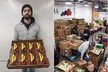
 © Cristiano Riciputi | FreshPlaza.com
"The current situation is a 'worsened déjà-vu' compared to the beginning of the conflict in Gaza. Whereas previously the circumnavigation of the Cape of Good Hope still made it possible to reach ports such as Dubai and Kuwait, the current critical situation in the Strait of Hormuz has paralysed flows. The situation is constantly changing, making the markets extremely unstable," reports Enzo Garnero, sales manager of Sanifrutta, a Piedmontese agricultural cooperative company that produces, processes and packages fresh fruit, and managing director of Aurum Fruit, a Piedmontese trading company specialising in overseas exports.
"The Strait of Hormuz is considered closed or at very high risk, and no shipping company is willing to cross it with cargoes of fruit. Over the past two months, there had been a fair amount of optimism, as many companies had resumed transiting the Red Sea. The sudden geopolitical aggravation has abruptly interrupted this positivism. Unlike other routes, the circumnavigation of Africa is considered 'almost useless' for Middle Eastern destinations. The port of Jeddah, located in the Red Sea, is hardly serviced. Ports in Bahrain, Kuwait and the United Arab Emirates (Dubai) are currently cut off from the main container lines."
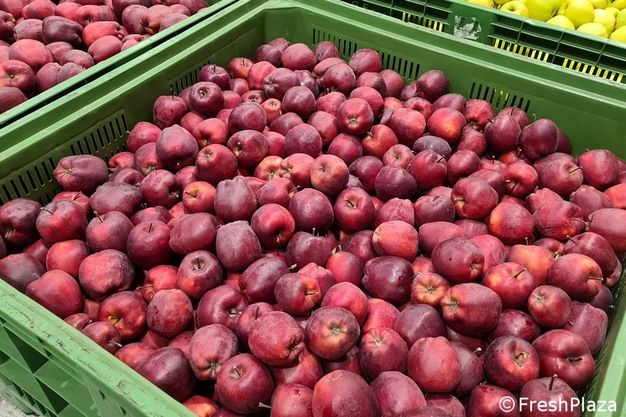
"Saudi Arabia is firmly in the top five overseas markets for apple exports from Italy. The United Arab Emirates, Kuwait and Bahrain, although with lower volumes individually, collectively represent a significant market share. Although the export season is drawing to a close to make way for production from the southern hemisphere, the current damage is affecting specific varieties. Red Delicious and Granny Smith apples make up the majority of shipments currently en route or planned. By contrast, the season for Royal Gala is almost over. Kiwifruit is also affected by the shipping difficulties, affecting several Italian exporters.
Exporters are facing an unprecedented series of logistical and financial emergencies. "Uncertainty about delivery times and the need for alternative routes generate variable and unpredictable additional costs. All cargoes scheduled for March are currently on standby, pending clarification of the feasibility of shipments. In addition, insurance premiums have skyrocketed, weighing heavily on company margins."
"The companies' immediate objective is to secure the goods already loaded. Only after the current deliveries have been resolved, will it be possible to assess the economic and logistical sustainability of future shipments, in a climate of uncertainty that requires constant vigilance and extremely flexible operational management."
Klaus Hölzl, sales manager of VOG-Home of Apples, explains that the consortium is closely following the current situation and keeps in constant contact with customers in the affected areas. "We are closely monitoring the situation and are in constant contact with our customers to follow the development and intervene where necessary. We are already assessing possible solutions together with business partners. The hope is that the tensions can be resolved quickly, so that stable conditions can be restored as soon as possible and trade can return to normal."
Kurt Ratschiller, commercial director of VIP - Association of Fruit and Vegetable Cooperatives of the Vinschgau, stresses that geopolitical instability is a factor of increasing uncertainty. "The number of crises and conflicts in the world has unfortunately been steadily increasing for decades, and the current situation is no exception. In this context, it is still difficult to predict precisely what the repercussions on the market will be: the effects will depend to a large extent on how the current tensions develop and, above all, how long they last."
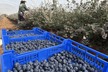
 © Dreamstime
The first repercussions are also beginning to be felt by businesses in Romagna. "Agricultural, industrial and logistics companies in our area are the first to be affected." Legacoop Romagna confirms that the blockade of the Persian Gulf and the blockade of the Strait of Hormuz have already stopped the containers of fruit and vegetables from Romagna bound for the Gulf area, especially kiwis and apples destined for Arabia and neighbouring countries. In the immediate future, the main concern is the risk of spoilage of goods already en route, but there is also growing uncertainty for shipments scheduled for the coming weeks. Among member cooperatives, there is also great alarm over the increase in energy costs: the first signs are coming from the road haulage sector, where the price of gas has reportedly already jumped by 40%, while oil has risen by around 10%, with fears of possible difficulties in supplies."
The escalation of the conflict in the Middle East could also fuel new price increases along the entire agri-food chain. In a note, Coldiretti President Ettore Prandini pointed out that the risk of a new energy shock is real, in a context in which the agricultural sector has not yet absorbed the effects of the conflict between Russia and Ukraine. Over the past four years, fertilisers have increased by 46% and energy by 66%. Considering that more than 25% of the global availability of fertilisers and more than a third of the fertilisers used in the world come from the Middle East, any disruptions in supply could translate into further increases in production costs, with repercussions for the entire supply chain and consumer prices. A phenomenon already observed after the outbreak of the war in Ukraine, when - according to Coldiretti analysis based on Istat data - food inflation went from 0.6% in 2021 to 9.1% in 2022 and 10% in 2023.