This year's mandarin campaign is proving to be particularly atypical. Between adverse weather conditions, agronomic issues, and tight availability, operators are navigating a market defined by limited supply. At Banagrumes, Chairman Alain Alarcón describes a situation where the core challenge is not demand, but sourcing: "The hardest thing today is finding the produce."
 © Banagrumes
Mediterranean production in steep decline
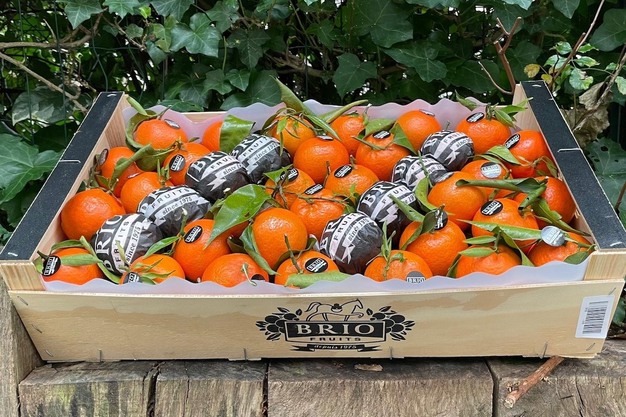
In Spain, volumes of Orri mandarins have fallen dramatically, with the crop estimated at nearly 50% lower than last year. According to Alain Alarcón, this decline cannot be attributed solely to recent weather events. "There were also difficulties during flowering and fruit set in the spring, which resulted in lighter yields per tree," he explains.
In Sicily, severe weather has also heavily disrupted production. Strong winds caused fruit drop and damage in orchards, particularly affecting Newhall at the end of its season. Packing stations were forced to carry out extensive sorting, with rejection rates at times reaching 40–50%. "We faced real supply shortages. We received only one or two shipments of Ciaculli mandarins from Palermo. It's an old variety that our retail clients especially appreciate. We make an effort to support it every year, but this season, availability was almost nonexistent." In Portugal, one supplier experienced power outages following storms, leaving the packing station inoperative for several days. Shortly afterwards, landslides severely damaged the access road to the facility, forcing long detours. "It has truly been a very complicated season," Alarcón sums up.
Tight supply despite moderate demand
At the Rungis International Market, trading activity remains relatively subdued, partly due to the school holidays in the Île-de-France region. Demand is present but lacks strong momentum. Even so, supply remains the main constraint.
"Israeli origin is currently more available, but there is a significant price gap between Israeli Orri and Spanish Orri, with Spanish fruit trading at much higher levels — almost double at the moment," says Alain Alarcón. Faced with this disparity, some Israeli exporters may consider slowing shipments until prices improve. "That's what we're hearing, although it's difficult to say whether this will actually happen. We are also hoping that Spanish shipments will increase in the coming weeks."
For now, the market remains in a delicate balance, dependent on actual orchard availability, unpredictable weather conditions — with further rainfall forecast in Spain this week — and export decisions in the weeks ahead. "Consumption is holding up reasonably well, but without product, it's very difficult to operate," Alain Alarcón concludes.
For more information:
Alain Alarcon
Banagrumes
Tel: +33 (0)1 45 12 28 40
[email protected]
www.banagrumes.com