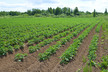
Agriculture officials in the United States are preparing to issue payments to growers of fruits, vegetables, and other specialty crops later this spring after several months of delay. The U.S. Department of Agriculture has confirmed the commodities eligible under the Assistance for Specialty Crop Farmers program, funded through US$1 billion set aside last December under the Farmer Bridge Assistance initiative.
Payments will be based on planted area in 2025, with commodity-specific rates to be announced at the end of March. Disbursements are expected to follow after rates are confirmed.
Industry groups representing fruit and vegetable growers are calling for additional assistance. More than 100 specialty crop organizations are requesting an extra US$5 billion as part of a broader agricultural aid package under discussion in Congress.
According to Tamas Houlihan of the Wisconsin Potato and Vegetable Grower Association, potato growers have faced estimated losses of US$789 million over the past three years. He cited a reduction of roughly 20 per cent in purchasing by major processors, lower domestic consumption, increased imports, and reduced export competitiveness. He also pointed to tariffs on machinery and other inputs that have raised production costs for growers and processors.
In Wisconsin, initial contract prices for the upcoming crop are reported to be down between 10 and 20 per cent, with indications that processor volumes may decline again this year. Vegetable producers supplying crops such as green beans and sweet corn for processing markets are facing similar margin pressure.
Labor costs are also affecting specialty crop producers. A Michigan State University study found that the average blueberry grower in Michigan is operating at break-even levels. Alyssa Houtby of the North American Blueberry Council said labor expenses have increased over the past five to ten years, affecting crops that rely on hand harvesting. She stated that reform of the H-2A visa program is needed to address labor availability.
Many specialty crops, including blueberries and citrus, are perennial, limiting producers' ability to adjust acreage year to year. Houtby noted that input costs are rising faster than sales prices across multiple fruit categories.
Recent freezing temperatures in Florida and other southern states have added further pressure to specialty crop producers. Industry representatives have encouraged lawmakers to use disaster response measures as a vehicle to pass additional aid.
In a separate announcement, USDA confirmed US$150 million in aid for sugar beet and sugar cane producers due to market disruptions and rising production and processing costs.
Source: Wisconsin Public Radio