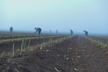
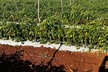
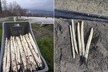
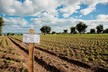
Many producers in France have been affected by storm Nils, violent gusts of wind, heavy rain, and flooding. While the extent of the damage varies from one sector and region to another, one thing is certain: the calendar has been disrupted for many crops. These include asparagus, which is particularly sensitive to soil conditions at the start of the season.
With the exception of the North, the last French region to go into production, the situation is widespread. Fields are impassable, making ridging impossible and delaying the start of the season by 2 to 3 weeks, depending on the terroir. This situation is all the more complicated for growers who are counting on the earliness of their crop, and it is a source of concern for the rest of the season, which could result in a clash between regional productions.
South-East: "We do not have any production to offer"
In the South-East, Maxime Gervasoni is one of the few farmers to have already ridged the soil. "We were able to prepare the ridges in January thanks to a favorable window of opportunity. But I think that around a quarter of the growers in the region have been able to do so," he explains. Unfortunately, the cold and rain that followed put the brakes on the momentum. "We do not have any production to offer today, and I think we will have a 10 to 15 day delay in production."
Each year, the farm produces around 200 tons of asparagus, making early production a strength. However, even with the land ready, the weather is still the deciding factor. "We are all in the same boat. Clients are coming, but unfortunately, they will have to wait a little longer."
South-West: A region hit by the storm
In Gironde and Landes, Thibaut Lebourg managed to ridge around 80% of his surfaces by anticipating the bad weather. "We started very early," he explains. But the storm wiped out some of our efforts. "We placed tarps, but with the gusts of wind that swept through the region, the tarps could not hold and blew away. We lost all the degrees we had gained to warm the soil."
As a result, it will be "very complicated to have asparagus before the end of the month." Although some volumes have emerged in the south of the Landes, Thibaut Lebourg estimates a delay of two to three weeks. However, he puts this into perspective. "Perhaps it is a blessing in disguise, as the market is not particularly buoyant at the moment with the school holidays. It is true that the first asparagus are selling at a good price, but they are just as expensive to produce."
Center: Impassable fields make ridging impossible
In the Anjou region, the situation is no better. Frédéric Poupard, an asparagus grower in Longué Jumelles, has not been able to start ridging. "The fields are impassable." Although production has not yet started, the delay is already a fact. "Usually, the harvest starts around March 1st outdoors. But this year, I do not think we can start before March 15th. After that, it all depends on the weather. Drier conditions are forecast over the next few days, so work on the plots should be able to resume more quickly."
Brittany: Asparagus is already arriving, even without the ridging
The same applies in Brittany. "We have to wait for the soil to dry out some before ridging. In these conditions, the soil would clump together when it dries, forming hard masses that prevent the asparagus from growing straight. The quality of the asparagus will be affected, with the result being twisted asparagus. Unfortunately, a lot of rain is forecast for next week, which will cause further delays. In these conditions, I do not think that the first asparagus will arrive before March 10th," explains Karel Kaptein, asparagus producer at La Torche.
This situation is forcing the asparagus grower to review his technical itinerary. "What is annoying is that the first asparagus is starting to come out before we have had a chance to ridge, so we will probably use them for green asparagus."
A "winter like any other" in the north
In all production areas, the sector seems to be facing a delayed start to the season. Only the North seems to have been spared for the time being. "We are used to this kind of weather in the region. For us, it is a winter like any other," explains Olivier Thomas of Ferme du Pont d'Achelles. "In any case, we never go into the fields to ridge before the end of March/beginning of April. And I think that by the end of March, we will be able to start work. The main cause for concern is the fact that regional production is overlapping. But if everyone is behind schedule, the impact will be less. The situation is not ideal, but it is not catastrophic either, so we remain positive."