Agronomist and expert Corrado Vigo reported that the situation of citrus cultivation in the Catania Plain is 'dramatic' following Cyclone Harry.
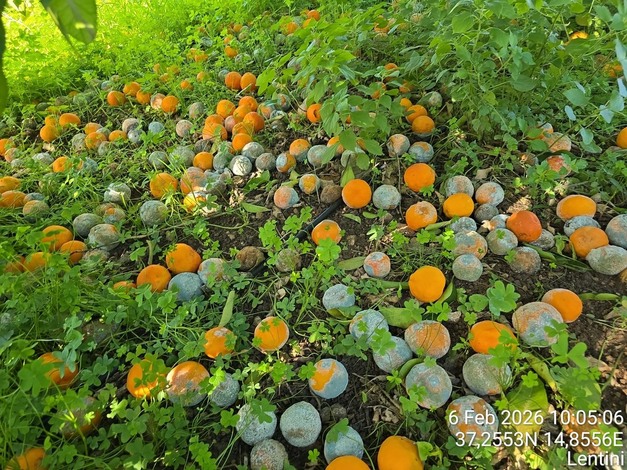 © Corrado Vigo
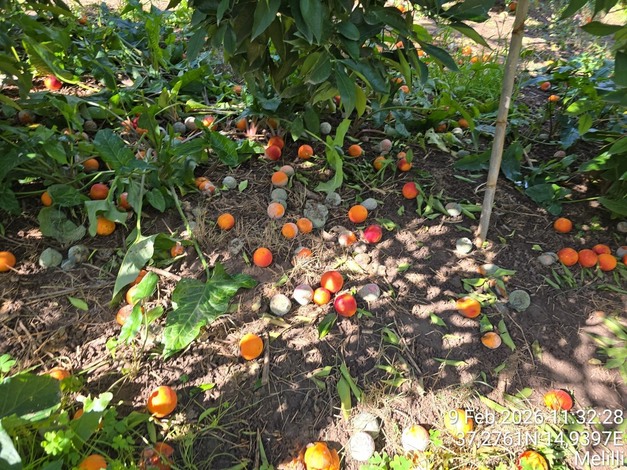
"It has been 19 days since Cyclone Harry, and after viewing dozens and dozens of farms and taking georeferenced photos, I can say that the damage is much greater than what was initially expected. The damage detected is extensive and profound, exceeding that caused by Cyclone Athos, and ranking as the second most serious event after the 1987 frost in terms of extent of the damage."
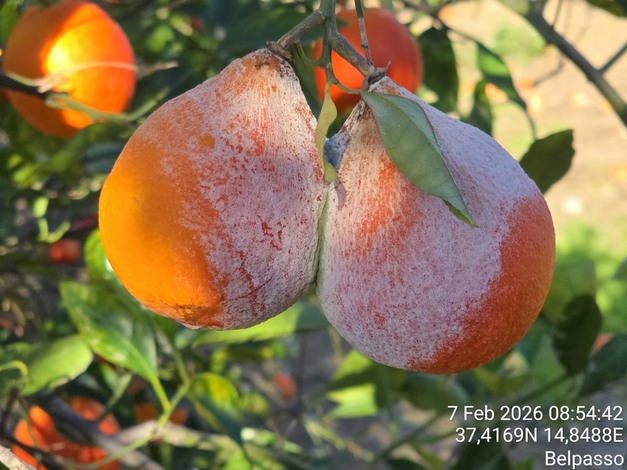 © Corrado Vigo
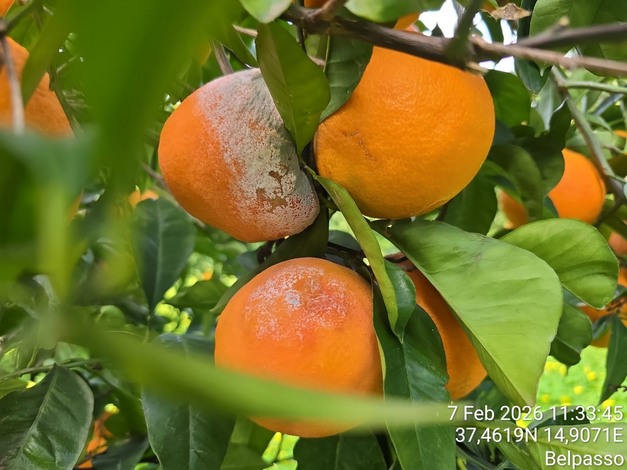
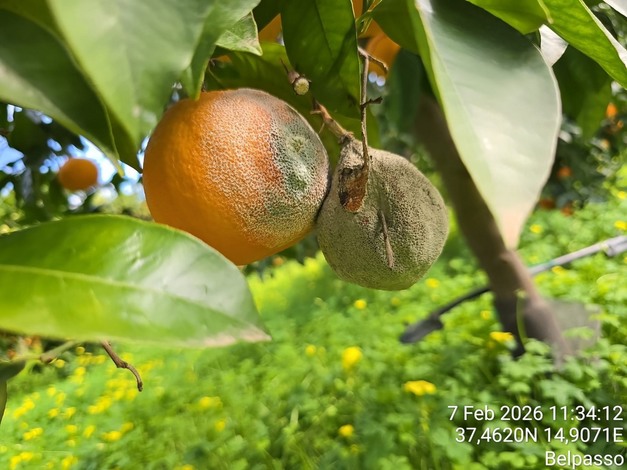
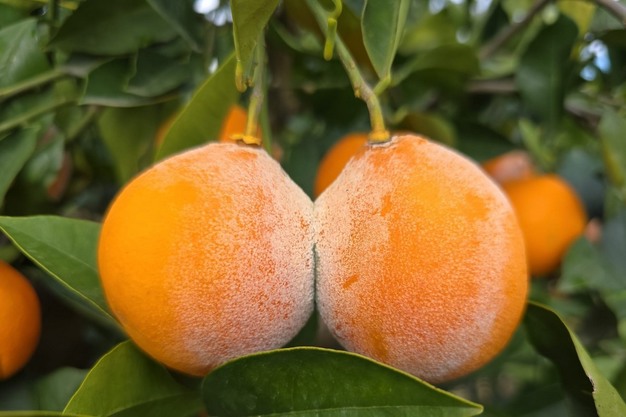
"The losses do not only concern the immediate fall of the fruits ready to be harvested, but we have also noticed accelerated biological degradation (mould and oleocellosis) due to mechanical damage and to the absence of favourable climatic conditions for aeration. Preliminary estimates indicate damage to the citrus fruit sector exceeding hundreds of millions of euros. First and foremost, we need immediate liquidity for the farms, as they are crushed by tax burdens in a context of a total lack of revenue."
 © Corrado Vigo
The weather event was notable because of its exceptional duration, with strong winds that raged for between 48 and 72 hours. According to Vigo, the integrity of the harvest was compromised due to three main processes:
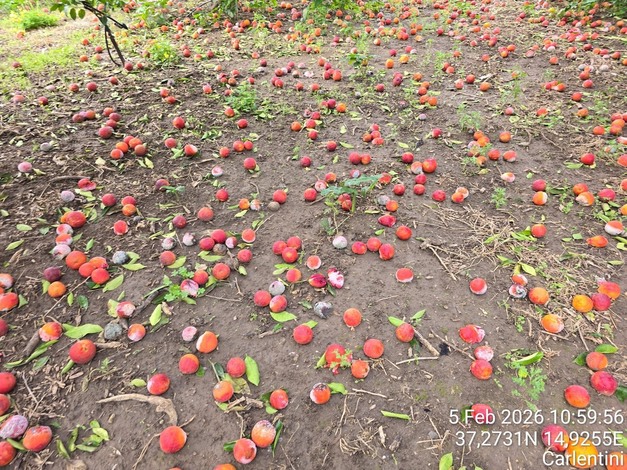
- immediate falls, as the oranges, which were already ripe and ready for picking, were blown off by the force of the wind.
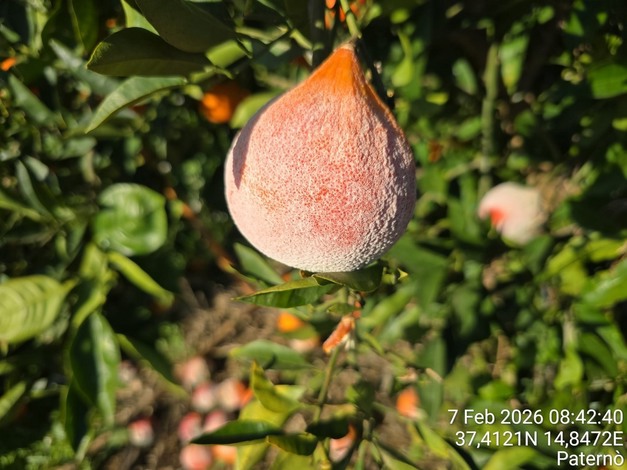
- oleocellosis and bruising, as prolonged rubbing between the fruits caused the oil glands to rupture. The release of essential oils caused tissue death (oleocellosis), thereby triggering a chain rot process.
- mechanical injuries, as the wind pushed the fruits against the branches and thorns, causing wounds that acted as a gateway for pathogens.
 © Corrado Vigo
"The persistence of rain and the absence of sunshine and post-event ventilation created the ideal habitat for mould proliferation. Massive attacks of Phytophthora citrophthora have been identified. The deterioration is so rapid that the fallen fruits tend to 'melt' and disappear within two weeks, leaving only a brown mark."
 © Corrado Vigo
The analysis shows how the extent of the damage varies considerably depending on the type of planting. "Late varieties are also very badly affected with extremely serious damage, while the Lane Late variety shows a slightly better situation. Young plants are in a particularly critical situation, as the wind can easily penetrate between the rows that are still without adequate protection. The adult plants are instead characterised by expanded canopies and present a greater capacity for natural defence, meaning they were only partially damaged thanks to the protection offered by the density of the canopy itself."
 © Corrado Vigo
Citrus growers appear deeply discouraged, if not desperate, according to comments collected by the expert. "They are disheartened and do not know how to restart their businesses because of the seriousness of the situation. Moreover, farmers are worried about upcoming deadlines such as IMU (property tax) and land reclamation consortium fees. They fear the arrival of tax bills with penalties if they fail to pay." Vigo strongly doubts that farmers have the financial means to face another season.
 © Corrado Vigo
Last but not least, Vigo stresses the need for immediate aid: "There is resignation about the timing of economic relief measures. Funds allocated for past events, e.g., for the 2018 flood, arrived years later (2023-2024). Due to the current crisis, immediate financial intervention is essential to enable companies to reopen."
 © Corrado Vigo