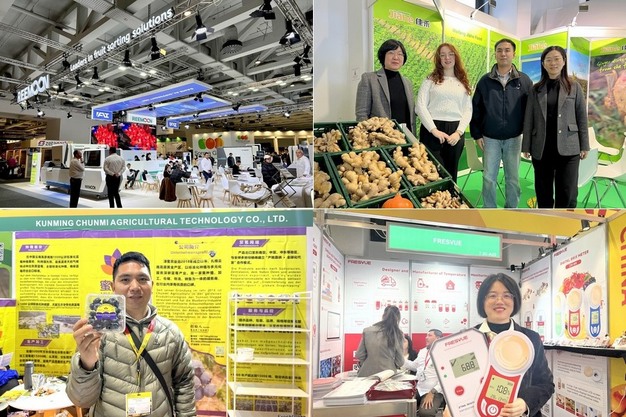
This year's Fruit Logistica was held from February 3 to 5 at the Berlin Exhibition Grounds in Germany. The overall composition of Chinese exhibitors remained largely consistent with previous years, with participation dominated by companies focused on traditional export categories such as ginger, garlic, and pomelo. In addition, several packaging material suppliers presented products including cardboard cartons, plastic containers, and mesh bags. A small number of mushroom and vegetable exporters also attended, reflecting the increasingly diversified development of China's fruit, vegetable, and related industries.
 © FP
© FP
Photo gallery of Chinese exhibitors
In terms of overall layout, this year, the Chinese exhibition area was relocated from Hall 26 to Hall 7.2, representing an improvement in location compared with last year, though it remained relatively remote. Several long-time exhibitors were absent, while a noticeable number of first-time participants made their debut. Unlike previous years, many exhibitors opted to display plastic fruit models rather than fresh samples, primarily to reduce transportation time.
 © FP
© FP
To reduce risks associated with the Red Sea route, an increasing number of exporters to Europe are shifting to the Cape of Good Hope route via South Africa. Although this alternative extends transit times by more than 20 days and still carries uncertainty, it offers relatively better risk control and stability, making it a pragmatic compromise for many companies.
 © FP
© FP
In recent years, West Africa, including countries such as Senegal and Angola, has become an increasingly important focus. However, as supply continues to rise, some markets are showing signs of saturation, leading to significant price pressure. Exhibitors reported that while overall demand has remained relatively stable, intensified competition and frequent price wars have sharply compressed profit margins, raising concerns about long-term sustainability.
Against the backdrop of declining margins in fresh produce exports, processed products, such as garlic cloves, garlic powder, and onion powder, have gained increasing attention. At this year's exhibition, many traditional garlic exporters showcased value-added processed products in various specifications and packaging formats, and the number of companies entering this segment continues to grow.
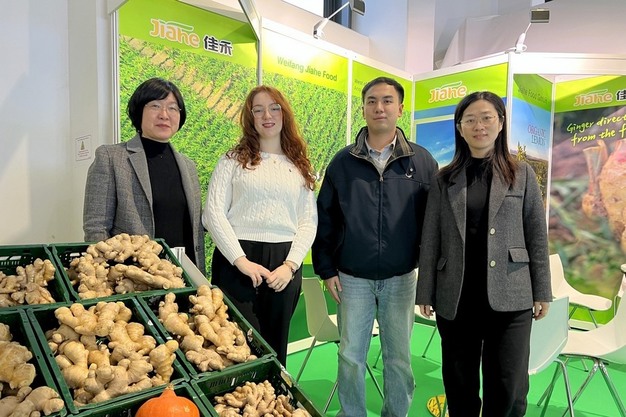
Meanwhile, the ginger planting area in Yunnan continues to expand, with future supply growth becoming increasingly evident. Exhibitors noted a marked rise in European buyer interest in Yunnan ginger, driven by its stronger pungency and the availability of organic certifications. While Yunnan ginger cultivation was limited only a few years ago, growing market acceptance has led to rapid expansion in both planting area and supply capacity.
 © FP
© FP
Exploring differentiated new categories
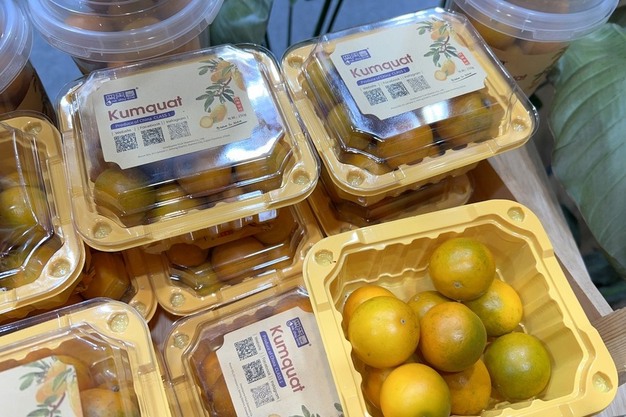
As competition intensifies in traditional categories, more exporters are turning their attention to differentiated products. Rong'an kumquats emerged as one of the key new products promoted by several companies at this year's exhibition. In recent years, Rong'an kumquats have gained strong traction in the domestic market, with premium gift boxes achieving high retail prices. Some exporters have already tested shipments to Dubai, receiving positive feedback, and are now aiming to expand into the European market. Exhibitors noted that many overseas consumers still associate kumquats with a sour or astringent taste, whereas Rong'an kumquats typically have a sugar content of 12–13° Brix, with high-quality fruit reaching 20° Brix, representing a significant shift from traditional perceptions.
 © FP
© FP
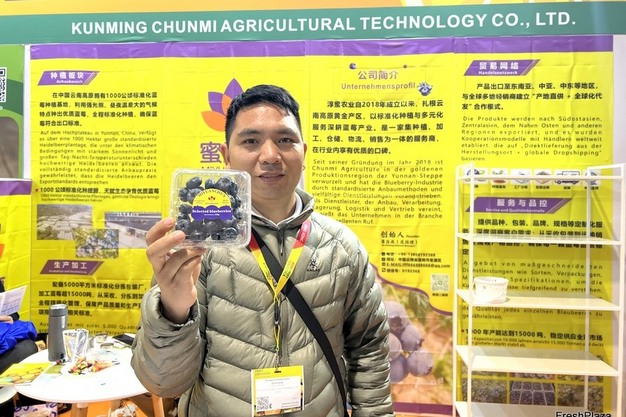
In addition, Yunnan blueberries have experienced rapid growth in recent years, with an increasing number of exporters bringing this emerging category to international exhibitions. Benefiting from a high-altitude climate, Yunnan blueberries are known for their high sweetness and have already gained strong recognition in the domestic market. This year marked the first participation of several Yunnan blueberry companies at Fruit Logistica, where their products attracted considerable interest from overseas buyers seeking new supply origins.
 © FP
© FP
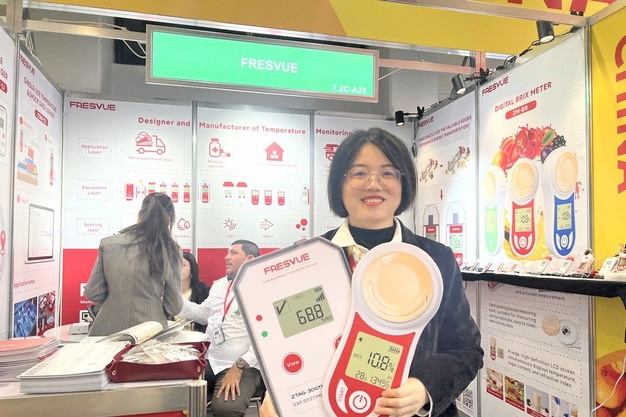
Beyond fresh produce itself, supporting technologies are also evolving rapidly. Competition in the market for temperature and humidity loggers is intensifying. As demand for real-time data access and remote monitoring grows, 4G loggers are gradually replacing older 2G and 3G models. However, exhibitors in this segment also noted that shrinking profit margins are pushing companies to diversify their product offerings. As a result, some are introducing new testing equipment, such as fruit sugar meters, in an effort to identify new growth opportunities and expand into adjacent markets.
 © FP
© FP