Climate change is making itself clearly felt in Morocco this season. Just weeks ago, growers were contending with a prolonged drought that entered its seventh year. Today, after relentless rains, dams are overflowing, raising concerns of flooding, such as in northern Morocco, where the entire city of Ksar Kebir had to be evacuated. The Moroccan government officially announced the end of the drought.
In Souss Massa, one of the country's major agricultural regions, weather-induced damage has remained moderate, yet it raises concerns over the quality of fruit and vegetables and export volumes. According to Amine Amanatoullah, a grower of various fruits and vegetables based in Agadir, the arrival of torrential rains reinforces fears that have been anticipated since the summer, namely the spread of phytosanitary challenges and the disparity between growers' needs and the solutions available on the market in terms of phytosanitary solutions and resistant varieties.
 © Fastexpo
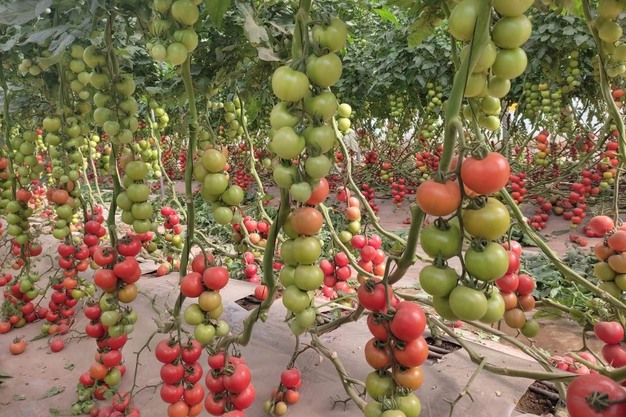
The grower describes a moderate weather pattern, but one that brings up old-new problems. "The weather is extreme in other parts of Morocco, but here in the Souss-Massa region, it's finally getting stable after years of drought. We have experienced all four seasons, with temperatures conducive to early vegetable production and, above all, none of the flooding that is a major problem in the north. However, we also have problems caused by rainfall, such as higher than usual humidity."
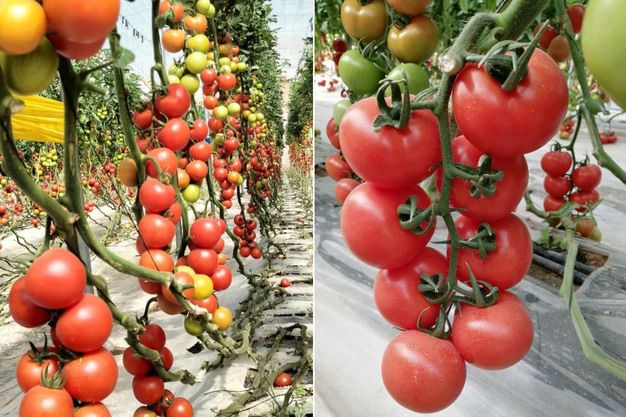
According to Amanatoullah, it is not the climate that is currently causing particular problems in the Souss-Massa region, but rather the suitability of available varieties. He explains: "We have been living with an arid climate for a long time, and our biggest problem was viruses such as ToBRFV for tomatoes, for example. Currently, growers in Souss Massa are facing a major problem with mildew due to humidity. Virus-resistant tomato varieties are not necessarily resistant to mildew, resulting in widespread quality issues."
 © Fastexpo
On the positive side, the long-awaited rains have restored dam levels to their pre-drought levels, even in the Souss Massa region, where rainfall is relatively lower than in other regions. However, growers will have to continue to rely on the nearby desalination plant, a vital lifeline, until the pipelines connected them to dams, currently undergoing maintenance, are repaired in one to two months, according to Amanatoullah.
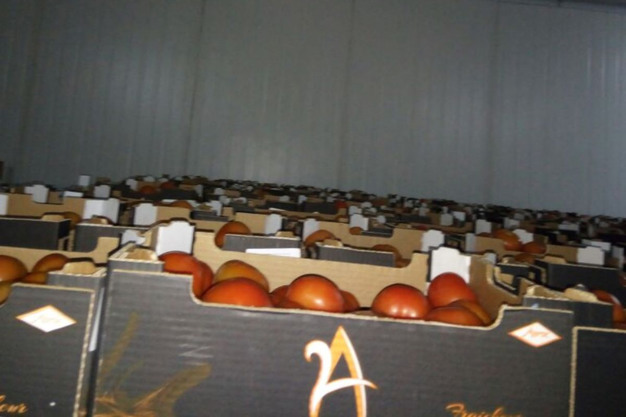
Three months ago, the grower warned of an eventual shortage in export-destined tomatoes as of February due to plant health and varietal issues. Today, according to Amanatoullah, there is indeed a shortage of Moroccan tomatoes on European shelves. He explains: "We are seeing significant quality issues that are affecting export volumes. Let's recall that tomato yields depend on the weather, of course, but they're also defined in relative terms by economic factors, namely the specific market and the commercial window in which each grower operates. The current situation is such that tomatoes for the domestic market, which is less concerned with appearance and size, are available in sufficient supply. However, the yield shortfall is being felt in European markets."
The gap in the European market is such that buyers are more tolerant this season than usual, focusing on supply and willing to re-sort and repack tomatoes at destination, according to Amanatoullah.
 © Fastexpo
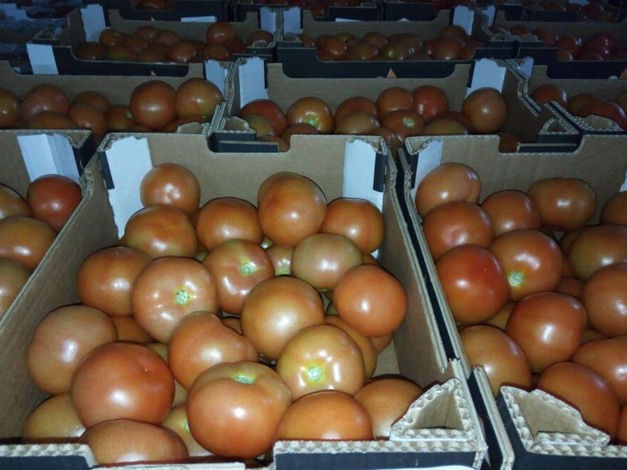
Quality issues at destination are exacerbated by logistical complications, an aspect of adverse weather conditions in Northern Morocco that growers in Souss Massa cannot escape. Amanatoullah explains: "Products are incurring long delays, even double transit times, due to logistical disruptions and the suspension of maritime rotations between Morocco and Spain, and the resulting congestion in ports. Tomatoes, therefore, sometimes arrive in poor condition, even if they were packed in good condition in Agadir."
This difficult period for growers is a natural transition between two opposing weather patterns. For Amanatoullah, "The transition is for the best. We were desperate for the drought to end. In the meantime, we have to readjust, just like our ecosystem, including nurseries, seed breeders, and suppliers of plant health solutions. Once again, we are in urgent need of suitable and resistant varieties."
Amanatoullah concludes on a positive note: "The coming season promises to be exceptionally good for all agricultural production in the country, all fruits and vegetables together, I dare to hope. Once the floods are behind us, Moroccan growers will be ready with better quality, better-tasting fruits and vegetables, better sizes, and better yields. Growers who have stood firm through all these years of drought, demonstrated their resilience, and insisted on continuing to produce will be rewarded with a greater ability to reap the benefits," Amanatoullah concludes.
For more information:
Amine Amantoullah
Fastexpo
Tel: +212 661 281321
Email: [email protected]