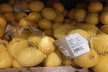
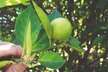
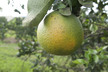
Parbat district in Nepal exported oranges valued at Rs 320 million, about US$2.4 million, during the current season, according to local authorities. Banskharka, the district's main orange-producing area, accounted for Rs 200 million, or roughly US$1.5 million, of the total export value.
Additional supply came from areas including Purnagaun, Raatmata, Shalija, and Bhotedanda of Mallaj, Deupur, Bajung, and Chhiter of Modi Rural Municipality, and Kurgha, Pangrang, Thanamaula, and Limithana of Phalebas Municipality.
Data from the Agricultural Development Office show that Parbat produced 3,421 metric tons of oranges this year. All volumes were marketed. Farmgate prices ranged between Rs 95 and Rs 120 per kg, equivalent to approximately US$0.71 to US$0.90 per kg.
Office Information Officer Sobita Subedi said production levels were stable and market pricing supported sales. Traders from Kathmandu, Narayangadh, Pokhara, and other domestic markets sourced fruit directly from growers. Improved road connections were cited as a factor facilitating access to orchards and markets. Some growers transported fruit directly to Kathmandu and Butwal.
Farmers also reported that transport improvements have eased the movement of fruit. Ram Prasad Gautam said one locality supplied oranges worth between Rs 10 million and Rs 15 million this season, equivalent to around US$75,000 to US$113,000.
Provincial and local authorities have introduced support initiatives for orange producers in recent years. With access to the Mid-Hill Highway, the Kaligandaki Corridor, and expanded rural road networks, commercial orange farming has increased in the district.
More than 400 farmers are currently involved in orange cultivation across approximately 833 hectares, mainly in Jaljala Rural Municipality, Phalebas Municipality, and Modi Rural Municipality. Interest in orange production has continued to expand across these growing areas.
Source: The Rising Nepal