Researchers at the University of Waterloo are developing an irrigation system that combines solar-powered pumps with repurposed electric vehicle batteries to address water and energy constraints faced by small-scale farmers in the Yucatán Peninsula.
The project is led by Carter McCrae, a master's student in Climate Change, and Aidan Iapicco, an MSc candidate in Biogeochemistry and a participant in the Collaborative Water Program. Their work links water management, energy supply, and circular economy principles by testing how second-life EV batteries can support agricultural irrigation.
The concept emerged from earlier research into electronic waste and metal recovery. During this work, the researchers were contacted by a BMW parts manager seeking alternatives for handling retired EV batteries. This led to a shift in focus toward battery reuse rather than direct recycling. The approach received initial funding through the Jack Rosen Memorial Competition for Environmental Innovation, allowing further development and field validation.
 © University of Waterloo
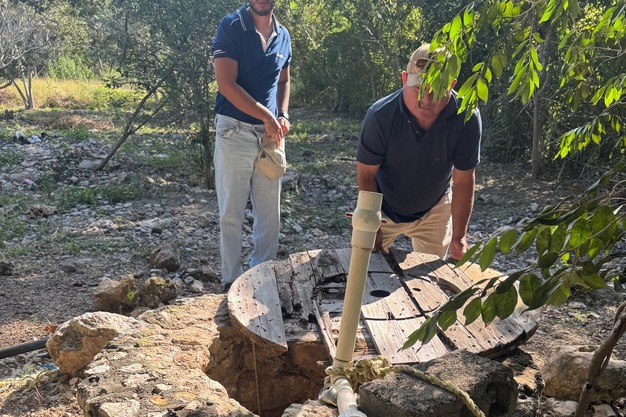
A field visit to the northern Yucatán Peninsula highlighted the tight relationship between water access, energy use, and farm viability. The region has shallow soils over porous limestone, resulting in rapid groundwater drainage, low water retention, and heightened contamination risks. These conditions restrict crop options, with tree crops such as citrus dominating production. Even these crops require frequent irrigation.
Many farmers rely on diesel or petrol generators for pumping, often refuelling every other day. Fuel prices of around 25 pesos per litre add to operating costs, particularly where farm access is limited and fuel transport is difficult.
The proposed system uses a machine learning-based model to assess the condition of retired EV batteries within minutes. Based on electrochemical performance, environmental factors, and economic criteria, each battery is matched to a suitable second-life application, such as solar-supported irrigation. This approach aims to extend battery use before recycling and provide a lower-cost energy option for farms.
For growers, the system is intended to reduce reliance on fuel, improve energy stability, and support a continuous electricity supply for irrigation. Existing research indicates that battery-supported irrigation can be financially viable when combined with renewable energy sources.
 © University of Waterloo
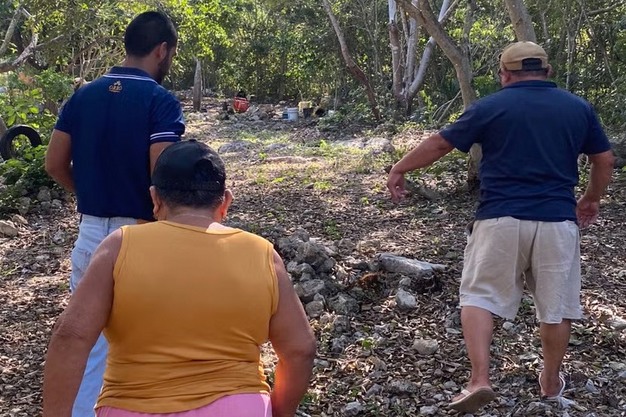
The project is supported by collaboration with David Henry, an economist with experience in irrigation projects in Mexico, India, Asia, and Africa, and Moises Fragoso, who assisted with local coordination and farm visits in the Yucatán. Further collaboration with Professor Sanjeev Bedi at the University of Waterloo is planned to integrate more water-efficient pump technologies.
Farmers interviewed during the visit noted that generator dependence has led to land abandonment in some areas. One farmer said, "Electricity is something we have wanted and considered for quite some time now."
The researchers plan to share findings with participating farmers and apply lessons from the Yucatán to other water-stressed regions where irrigation reliability and energy access remain limiting factors.
For more information:
University of Waterloo
Tel: +1 519 888 4567
Email: [email protected]
www.uwaterloo.ca