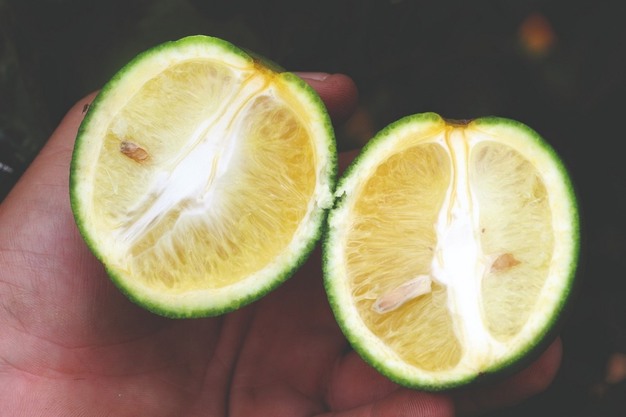
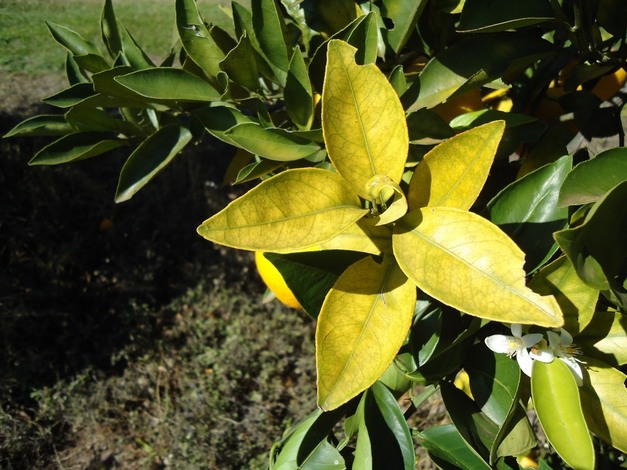
Brazilian citriculture still struggles with one of its biggest structural issues: the spread of greening (HLB), the most destructive disease impacting the sector. Fundecitrus reports that the average incidence of HLB in the citrus regions of São Paulo and Minas Gerais is now 47.6%, a significant number that highlights the severity of the problem.
 © Fundecitrus
"Greening increased this year, but less than in past seasons," explains Guilherme Rodriguez, coordinator of the Pesquisa de Estimativa de Safra (PES) at Fundecitrus. Although growth continues, its rate has slowed compared to previous years, when annual increases were more substantial.
 © Fundecitrus
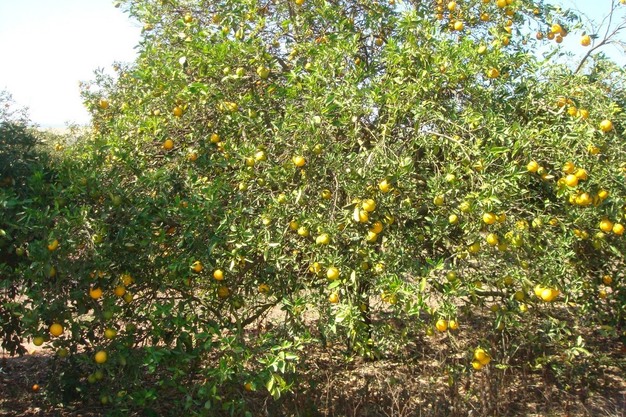
The situation varies across regions. Some traditional areas report incidences near 80%, while others, like the Triangulo Mineiro, have levels below 1%. "These are regions where the disease remains low, although we have also seen an increase in them over the past year," Rodriguez notes.
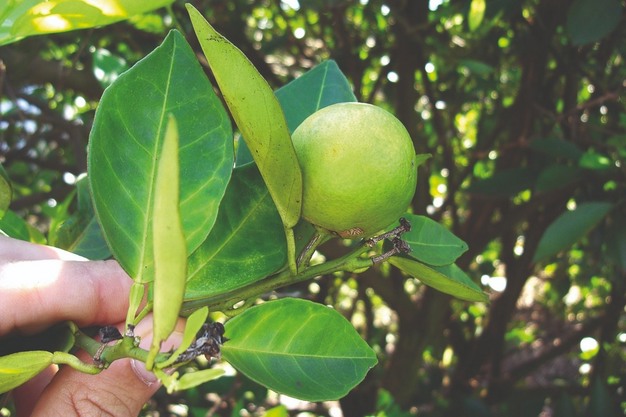
Greening significantly affects production. "Last season, Brazil produced 230 million boxes of citrus, and 18% of the fruit was lost before harvest. 50% of the fruit that fell to the ground fell because of HLB," the specialist stated. "This is the highest level we have recorded so far."
 © Fundecitrus
Besides causing fruit to fall, the disease also directly impacts quality. Rodriguez explains, "When the plant has the disease, the quality of the juice is compromised, sugars decrease and acidity increases," a factor that is especially relevant for the juice industry.
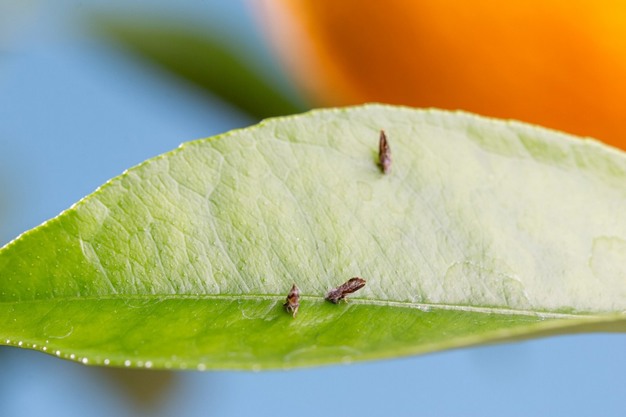
Greening control leads to higher production costs. "There is no cure for the disease. Once a plant is contaminated, it cannot recover," Rodriguez stated. Management, therefore, focuses on removing infected plants and replacing them with healthy ones, as well as controlling the psyllid, the insect that transmits HLB, through chemical treatments, biological control, botanical products, and kaolin used as a repellent. These practices, which were uncommon in the past, are now essential to Brazilian citrus cultivation.
 © Fundecitrus
At the sectoral level, collective efforts are especially significant. "Over 38,000 yellow traps are used to monitor the psyllid, and since 2018, around 5.8 million diseased plants have been removed near commercial properties. This is a regional initiative supported by producers and society as a whole," Rodriguez highlighted.
Looking ahead, the specialist does not dismiss the possibility of disease stabilization. "The psyllid population has decreased over the past two years. It is possible that the incidence will stabilize, although remaining high," he states. The growth of new production areas with lower sanitary pressure could slowly alter the landscape of Brazilian citrus cultivation.
 © Fundecitrus
The message for growers is clear: "Citrus growing has become a high-tech, high-intensity activity. To manage greening, you have to apply everything that science has developed so far, without half measures."
 © FundecitrusFor more information:
Guilherme Rodriguez
Fundecitrus
Brazil
Tel: +55 16 99629 2471
www.fundecitrus.com.br