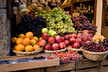
Afghanistan exported 317,517 tons of fresh fruit in 2025, according to the Ministry of Industry and Commerce's annual trade report. The total value of these exports reached about US$142 million, providing foreign currency income for an economy that remains closely tied to agriculture.
The Ministry reported that exports included apples, pomegranates, apricots, grapes, melons, watermelons, and figs. Shipments were sent to neighbouring countries such as Pakistan and Central Asian states, as well as to markets in the United Arab Emirates, Turkey, and parts of Europe. The data highlights the country's ability to supply international markets, despite ongoing constraints.
Industry representatives say the 2025 season was marked by logistical pressure and rising costs. According to the Afghan Chamber of Agriculture and Livestock, transportation and border access remain the main limiting factors. CEO Wasim Safi said exports are continuing, but efficiency and profitability have declined. "Our exports are currently ongoing, but our primary problems lie in the transport sector and the associated costs of transfer," Safi explained.
He noted that repeated and unpredictable closures at border crossings, particularly with Pakistan, forced traders to reroute shipments. "We are now forced to conduct our exports through the ports of Chabahar or Bandar Abbas in Iran," Safi said. These routes increase transport time and costs, affecting product condition for perishable fruit.
Economic analysts point to structural gaps in storage and processing. Shams-ul-Rahman Ahmadzai said border disruptions in 2025 exposed the lack of cold storage capacity. "For the future, we must prioritize the construction of standard cold storage. Fresh fruit is highly perishable, and without standard facilities to maintain the cold chain, our farmers remain at the mercy of border politics," he said.
Ahmadzai also referred to processing as a way to manage transit risk. He said converting fresh fruit into processed products such as juice or canned goods could extend shelf life and reduce exposure to delays.
Mir Shaker Yaqubi, another analyst, called for greater use of alternative trade routes. He said dependence on a single transit corridor has become a constraint and pointed to underused routes, including the Lapis Lazuli corridor and North-South links.
The Ministry did not publish year-on-year comparisons, but domestic market conditions reflected export disruptions. Border closures led to surplus volumes inside the country, with fruit deteriorating in trucks or entering local markets. This oversupply pushed domestic prices down, benefiting consumers while reducing farm incomes.
The 2025 figures show that fruit exports remain a core part of Afghanistan's trade profile. At the same time, traders and analysts agree that expansion of cold storage, processing capacity, and diversified transit routes will be central to improving stability as the sector moves into 2026.
Source: The Kabul Times