While there is no consolidated data documenting the total number of farms or production volumes impacted by TR4, it is clearly a growing threat to the banana industry. Ecuador, the world's largest banana exporter, confirmed its first and only known case of TR4 in late 2025. Latin America's first confirmed cases appeared in Colombia in 2019, followed by Peru in 2021, and Venezuela in 2023. The presence of TR4 in Latin America could have a devastating impact as it is the world's largest banana exporting region. According to the Food and Agriculture Organization of the United Nations (FAO), roughly 75 percent of banana exports globally come from Latin America and the Caribbean, and most bananas imported into North America also come from this region.
TR4 affects production for decades
Once TR4 is present in soil, it cannot be simply treated or eradicated and can survive for decades. This means bananas cannot be grown in the affected area for an extended time. Affected farms are forced to halt production in that area, destroy the affected plants, and often must consider pivoting to different crop varieties that aren't impacted by the fungus. The process of planting and growing new crops can take several years until they are ready to sell. "The drop in production represents a major loss of income and can be devastating for banana farmers and farming communities," says Rob Desson, Sr. Business Partnerships Manager for North American Fresh Produce, Fairtrade America.
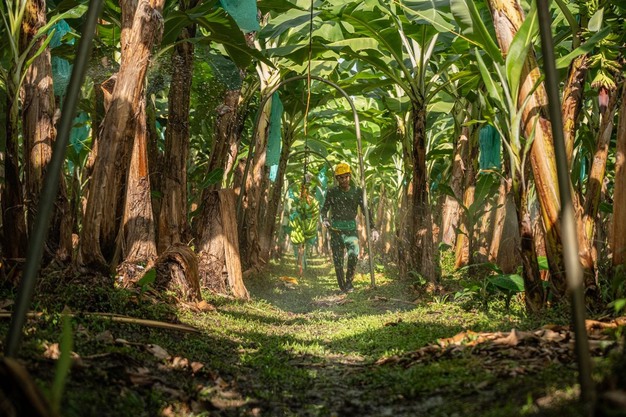 © Nicolás Becerra Manrique
Photo taken at Beatrice Flye De Mitchell, a hired labor organization in Colombia. Credit: Juan Nicolás Becerra Manrique.
Prevention limits spread
Prevention on farms is the key to limiting the spread of TR4 and minimizing the impact on farmers. Many farms that are unaffected have implemented biosecurity measures, which have resulted in more effective disease prevention. Evidence also suggests that improved soil health - promoted by using bioferments and the introduction of beneficial microorganisms – slows the spread of the soil-borne fungus. "However, these measures are a considerable investment for banana farmers and as a result of low banana prices, farmers often don't have enough income to cover these costs," commented Desson. They need more income to be able to invest in effective prevention methods. "Farmers are unfairly shouldering the burden of addressing TR4 and need long-term support from supply chain partners who are willing to share responsibility by funding effective prevention measures. Unless retailers and importers accept their role in sustainable production and help finance social and environmental solutions, disruptions from poor soil health and climate change, like TR4 and other crop diseases, will persist," Desson said.
While there are efforts in the banana industry to develop new varieties that are more resistant to TR4, these are not a viable long-term solution. New varieties take time to test, develop and grow, and they will not solve the driving factors behind crop disease.
Impact on consumer
Outbreaks not only have an impact on the growers' businesses and on banana supply, but also on the consumer. A decrease in supply means there are less bananas on the shelves for U.S. consumers, resulting in higher prices in the medium to long run. In 2025, consumers already saw an increase in banana prices due to the introduction of U.S. tariffs as well as climate change-related declines in supply from major banana-growing regions, most notably Costa Rica. It is likely that these issues will continue to impact pricing in 2026 and beyond.
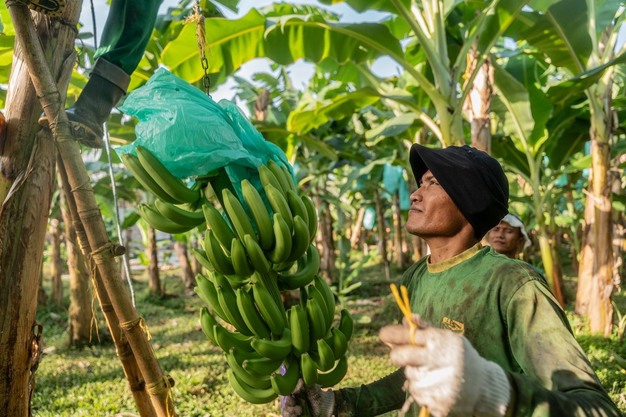 © Nicolás Becerra Manrique
Photo taken at Beatrice Flye De Mitchell, a hired labor organization in Colombia. Credit: Juan Nicolás Becerra Manrique.
Fairtrade enables investment in TR4 prevention
"To help prevent future outbreaks, U.S. shoppers should ask their retailers to start stocking Fairtrade bananas," shared Desson. Banana importers that source Fairtrade commit to paying a fixed minimum price and premium that puts more money in farmers' wallets. This extra sum of money can help support their investment in TR4 prevention practices. If a store already stocks Fairtrade bananas, Desson recommends shoppers make a long-term commitment to choosing that bunch over other options, which are typically traded on terms that undermine growers' ability to address TR4 and other growing challenges. "Our figures show that switching to Fairtrade bananas would cost the average American consumer roughly USD $5/year. This small cost to the consumer now could have a huge impact on farmers' livelihoods and help stabilize the banana industry," he said.
On a positive note, Fairtrade banana volumes in the U.S. grew by just under 20 percent in 2025 alone and are part of a longer-term growth of 38 percent from 2022 through 2025. "We expect this trajectory to continue in years to come as U.S. retailers strive to meet growing demand from their customers," added Desson.
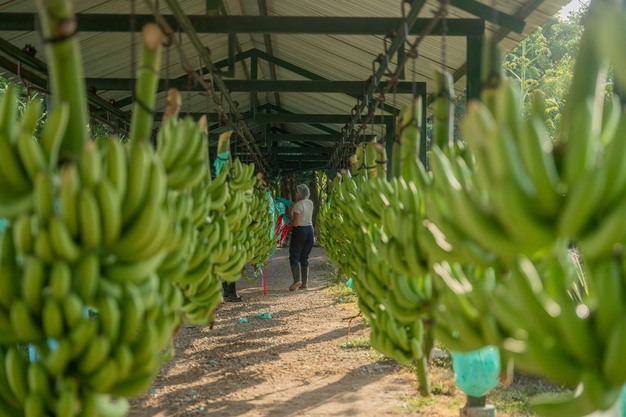 © Nicolás Becerra Manrique
Photo taken at Beatrice Flye De Mitchell, a hired labor organization in Colombia. Credit: Juan Nicolás Becerra Manrique.
How farmers benefit from Fairtrade
Fairtrade is more than a certification as it offers on-the-ground farmer support staff in commodity growing regions across Africa, Asia Pacific, and Latin America & the Caribbean. The organization's Latin America and Caribbean Fairtrade Producer Network (CLAC) provides context-appropriate training and technical assistance to banana farmers and has been working across the region for more than 20 years. In Ecuador, Colombia, Peru, and the Dominican Republic, Fairtrade is promoting better environmental practices, encouraging the use of bioferments, and fostering healthier soil to enhance crop resilience through its Sustainable Banana Program.
So far, 1,700 farmers have benefitted from the program, which has led to a 20 percent increase in productivity for participating conventional and organic banana farmers. In addition, it has resulted in a 20 percent reduction of synthetic fertilizer use for participating conventional farmers.
 For more information:
Rob Desson
Fairtrade America
Tel: +1 613-689-2340
[email protected]
www.fairtrade.net