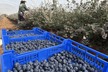
A delegation from the People's Republic of China visited Mendoza to advance a phytosanitary agreement between Argentina and China that would permit the export of stone fruits, especially plums and peaches produced in the province.
The delegation included technicians and authorities from the International Standards Research Centre for Inspection and Quarantine and Technical Regulations (GACC), along with representatives from Shanghai and Shenyang Customs. The visit was part of a nationwide audit of various productive regions, tailored to each area's characteristics.
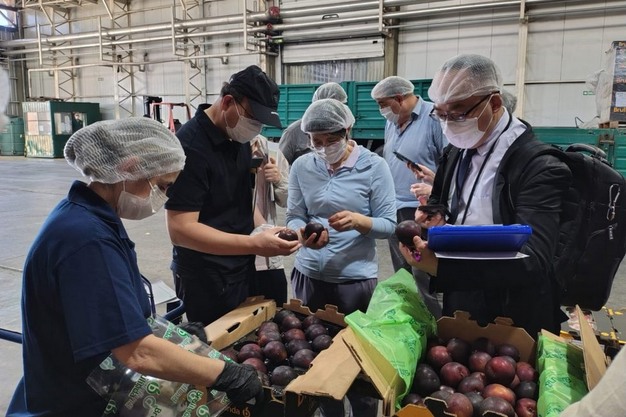
In Mendoza, officials visited production facilities. The Chinese technicians showed particular interest in the sanitary procedures for pest control and the traceability systems employed during production.
 © Gobierno de Mendoza
Mendoza has successfully established phytosanitary protocols with China for other products like cherries. It has also been recognized as a Mediterranean fruit fly-free zone for the Uco Valley and Southern Oasis departments. This sanitary status enables faster commercial processes for specific products and provides a competitive edge for local producers, facilitating access to new markets and strengthening existing ones.
"For years, we have been working with the public and private sectors to achieve this goal, which would allow us to reach a market of 1.4 billion people," stated Gerardo Arribas, in charge of ProMendoza's food sector.
He also highlighted that opening the Chinese market would create new business opportunities, particularly for dehydrated or industrial plums, known as D'Agen, which could also be sold as fresh fruit. "Currently, Mendoza has about 2,500 plum and peach producers, but only 50 export. If this agreement is successfully implemented, production will need to grow, benefiting not just current exporters but the entire sector."
During their visit to Mendoza, the delegation toured Brulinda, a company owned by Armando Brunetti. He explained, "In this first inspection, the delegation saw our operational process. We believe Mendoza has great potential to serve this market. We showed them how we processed peaches, nectarines, and plums. The technicians observed the entire procedure, from when the produce enters the facility, how it's packed, and then cooled, which ensures our fruit arrives thousands of kilometers away in optimal condition."
The phytosanitary protocols establish technical and sanitary standards managed by Senasa, including inspections, certifications, and treatments like cold processes or industrialization. They are periodically reviewed and updated through risk analysis and technical visits between countries to ensure safety and compliance.
For more information:
Government of Mendoza
https://prensa.mendoza.gob.ar