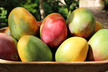
Nigeria is expanding mango production as growers seek greater access to European fresh fruit markets. Industry estimates indicate output could reach up to one million tons in the coming years, positioning the country as Africa's third-largest producer and the world's 11th largest, with annual growth of about 0.9 per cent.
Despite increasing volumes, Nigerian mangoes continue to achieve lower prices in export markets, typically between US$1.10 and US$1.45 per kilogramme. Analysts link this gap to constraints in export infrastructure and difficulties in meeting phytosanitary requirements set by the European Union and the United States.
Europe imported nearly 447,000 tons of fresh mangoes in 2024 and remains the world's second-largest mango import market. Demand is concentrated on fibre-free varieties such as Kent and Keitt. France and the United Kingdom are cited as potential entry points for Nigerian exporters. France imported around 57,000 tons in 2024, while the United Kingdom imported about 87,000 tons, partly driven by diverse consumer demand.
Market access depends on compliance with pesticide residue limits and pest management protocols, particularly for fruit flies. Prof. Mohammed Atanda, Executive Director and CEO of the National Horticultural Research Institute, said Nigeria could expand exports if technical gaps are addressed. "The prospect is large. One resource is natural; the other is human," he said, pointing to the country's ability to grow mangoes across a wide range of conditions.
Atanda also referenced indigenous varieties, including the Ogbomoso mango. "There is a particular mango variety we call Ogbomoso. It is only in this country that you can have that type," he said.
Post-harvest losses remain a constraint due to limited processing capacity. NIHORT is operating a pilot mango juice plant and providing training under partnerships with federal agencies and the World Bank's TVET program.
According to Aiyeola Adetiloye, CEO of the Produce Export Development Alliance, Nigeria currently exports less than one per cent of its mango output to high-value markets. "The challenge we have is that mango export from Nigeria is going through a process of redefining," he said, citing fruit fly control as a key barrier.
Sector stakeholders indicate that improved compliance, pest management, and infrastructure will determine whether Nigeria can translate production growth into European export volumes.
Source: The Nation