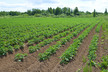
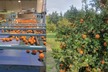
Morocco's fruit and vegetable export sector recorded higher shipment volumes between 2023 and 2025, while export revenues reflected a more balanced market environment. Data from the Office des Changes and Morocco Foodex show export volumes increasing from about 1.4 million tons in 2023 to nearly 1.6 million tons in 2025, representing cumulative growth of around 15% despite climate pressure and volatile international trade conditions.
Three product groups accounted for most of the volume expansion. Fresh tomato exports continued to play a structural role, reaching an estimated 745,000 tons and showing ongoing growth since 2023. Market garden vegetables such as peppers, zucchini, and green beans, largely produced under greenhouse conditions, also expanded, supported by off-season demand from Europe. Avocados, a more recent addition to Morocco's export portfolio, posted another year of higher shipment volumes.
Export value trends diverged from volume growth. Total export value rose from about 35 billion dirhams in 2023 to an estimated 43 billion dirhams in 2025, equivalent to roughly US$3.6 billion and US$4.4 billion, respectively. Revenue growth slowed in 2025 following two years marked by elevated European prices linked to supply chain disruptions and food inflation.
Tomato exports illustrate this shift. In 2023 and 2024, revenue growth was supported by both rising volumes and high unit prices. In 2025, shipment volumes increased further, while prices declined as European supply recovered. Market garden vegetables followed a similar pattern, with higher volumes offset by increased competition and limited price support. Red berries and, to a lesser extent, avocados maintained higher price levels, although price ceilings became more visible.
The 2025 market environment reflects a broader normalisation after the 2022 to 2023 inflationary period that temporarily increased export values. The recovery of production capacity in Spain, Italy, and the Netherlands contributed to lower prices across European markets. For Moroccan exporters, this environment implies tighter margins, as production costs for energy, inputs, and labour remain above pre-crisis levels.
Exports remain heavily concentrated in the European Union, with France, Spain, the United Kingdom, Germany, and the Netherlands as key destinations. While this supports logistics efficiency, it also increases exposure to European price cycles and regulatory developments. At the same time, competition from Spain, Egypt, and Turkey continues to intensify across several product categories.
Water availability remains a central constraint. Greenhouse tomatoes, market garden crops, and avocados are among the most water-intensive export products. Recent drought years highlighted the pressure on water resources, particularly in Souss-Massa and parts of Gharb. Investments in irrigation efficiency, desalination, and wastewater reuse have mitigated risks, but the expansion in export volumes in 2025 has further increased pressure on local water basins, raising questions about future crop and export strategies.
Source: The North Africa Post