Because Christmas and New Year's Day both fell on weekdays, the impact on the supply chain of fresh produce was significant these past few weeks. Picking, packing, and shipping schedules were all thrown off. Add to that cold weather in different parts of the USA and the result is congestion and delays. "Hopefully, everything goes gradually back to normal this week," says Ronnie Cohen with Vision Global Group, importer of limes, lemons, and mangos.
South America's market share grows
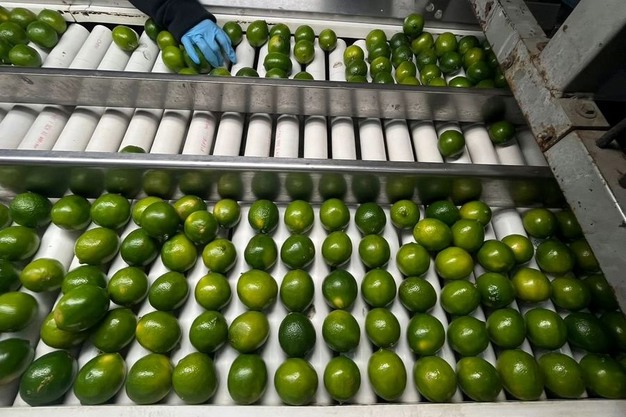
When looking at the lime market, Mexico continues to be the main supplier of limes to the USA with a market share of about 85 percent. Historically, production out of Mexico has been lower during the winter season, roughly from January through March. This has opened windows of opportunity for other countries, in particular Colombia and now Peru. "Every year, these two countries take away a bit more market share from Mexico," shared Cohen. Colombia is an experienced overseas exporter as the country has traditionally been focused on exports to the EU. While Peru's lime production is smaller, the Piura region in the north has a dry and arid climate that's more than suitable to produce limes. It's different from other lime growing regions that usually have a more subtropical climate. The advantage of an arid climate is that it helps avoid certain condition issues upon arrival, usually associated with more humidity. Transit times from South America are a challenge, but through trial and error, adjustments have been addressed, allowing for excellent marketability.
 © Vision Global Group
Different pricing structures
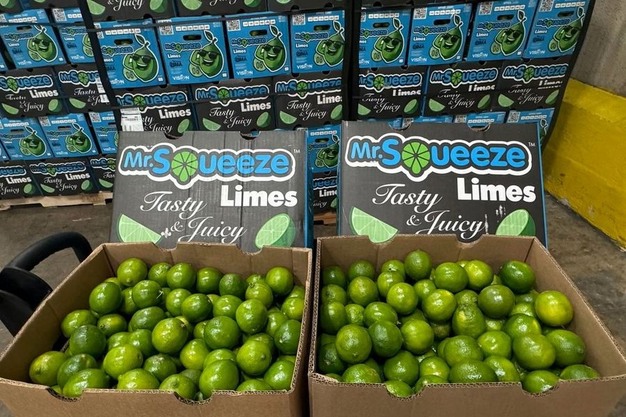
There is quite a distinction between the lime markets of Mexico and Colombia/Peru. "Mexico has a strong and competitive domestic market, which affects their export business," said Cohen. "Because local demand is relatively high, export prices are being elevated to sometimes unsustainable levels." In addition, Mexico's lime market isn't as organized as the lime markets in South America. Both Colombia and Peru are home to many commercial farms who are willing to work on stable pricing. "Based on historical pricing, they provide a pricing structure that allows importers and retailers to promote limes at a fixed price for a time frame of a month." Mexico's lime industry isn't organized that way and pricing changes on a weekly or even daily basis, making it challenging to plan for promotions.
 © Vision Global Group
Elevated pricing
While Mexico has always been the main driver of limes entering the USA market, things are changing. With countries like Colombia and Peru gradually taking a bit more market share, pricing becomes more stable as well. "As a result, we are no longer seeing those extremely high prices of $80/box for instance." However, pricing is currently elevated due to low production volumes in combination with steady demand. U.S. consumption of limes has grown organically each year, driven by a diverse population. People from Central & South America as well as Asia use limes in many of their cuisines. USA consumers on the other hand use limes as an ingredient for cocktail as well as flavor enhancement and garnish for beer.
Last week, the lime market was in the mid to high $20s, but this week, pricing is in the $30 range. This will continue for the remainder of January and is projected through February as well. While it remains to be seen, pricing may even stay elevated into March. However, that will largely depend on Mother Nature. The time frame between flowering and harvesting is 90 - 100 days and one windstorm or cold snap could affect production levels for the season.
 For more information:
Ronnie Cohen
Vision Global Group, LLC
Tel: (+1) 917-930-7178
[email protected]
www.visionglobalgroup.com