Due to its strategic location, the Middle East has long been a significant crossroads for the global fruit trade. The local market is rich in variety, with consumers placing strong emphasis on taste and texture.
In recent years, healthy eating has gained significant momentum, while the fast pace of urban life has further popularized the concept of "fruit as a snack." Kumquats, with their convenience and versatile consumption scenarios, align well with this trend. In response, Chinese exporters have introduced crisp, honey kumquats to the UAE market, gradually entering local wholesale and retail channels and offering Middle Eastern consumers a premium alternative to the traditional Spanish and South African kumquats.
 © One Day One Europe
In the Middle East, kumquats are predominantly sourced from South Africa and Spain, with a supply window typically running from May to March. These kumquats are generally smaller, higher in acidity, and usually peeled before consumption. They are commonly eaten fresh, used in desserts, or processed into jams, and have established a mature market presence in the region.
Crisp, honey kumquats, entering the Middle East alongside the "fruit-snacking" trend, are larger in size, with a juicy, crunchy texture, thin edible skin, and no seeds. They cater to demand for high-end, fresh fruit that is healthy, convenient, and suitable for fast-paced urban lifestyles, serving consumption occasions similar to those of blueberries.
With the start of the 2025 harvest season, China has begun exporting crisp, honey kumquats to international markets. Industry insiders expect exports to the Middle East to continue growing, with combined shipments to the Middle East and North America projected to increase more than fivefold compared with 2023.
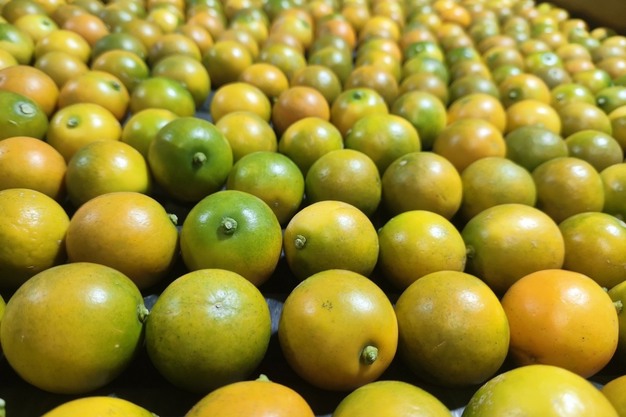 © One Day One Europe
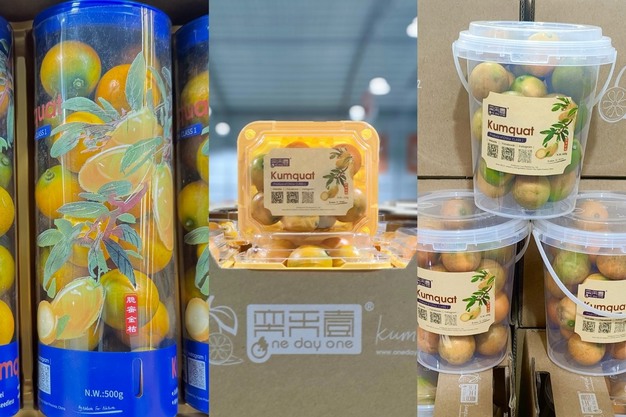
Alongside market entry, diversified packaging formats are also helping align the product with Middle Eastern consumer preferences. Lan Bilong, General Manager of Onedayone Group Zhangzhou, noted that the company offers multiple packaging options, including standard boxes, buckets, and rocket tubes, designed for household consumption, on-the-go snacking, and sharing occasions, bringing new consumption experiences to the local fruit market.
To ensure quality stability during long-distance transport, Chinese exporters are strengthening cold-chain logistics and freshness management, further enhancing the competitiveness of kumquats in the Middle East. With their distinctive eating experience and convenience, crisp and honey kumquats are emerging as a new favorite "fruit snack" among Middle Eastern consumers.
 For more information:
Maggie Peng
Onedayone Group
Tel: +86 18717865462
[email protected]
www.onedayonegroup.com