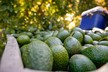
Rwanda's avocado sector has expanded rapidly over the past five years, supported by farmer participation, government policy, and rising international demand. Exporters, growers, and authorities report rising volumes, broader market access, and ongoing investment across the value chain.
S&I Fresh began exporting avocados in 2021 with volumes of around 200 kilograms per week. According to Managing Director Sada Gakuru, shipments have since increased to between five and 12 tons per week, depending on seasonal availability. She attributed the growth to expanded plantings and policy support. "Before, there were only a few exporters, but now we have become many in this avocado sector," Gakuru said. The company currently exports mainly to Dubai and the wider Middle East and is preparing to enter European markets.
At the national level, the National Agricultural Export Development Board identifies avocados as a priority horticultural export. NAEB data shows exports rose from about 840 tons valued at US$840,500 in 2019/20 to more than 4,201 tons generating over US$8.6 million in 2024/25. Avocados' share of Rwanda's total horticultural export revenues increased from 2.93 per cent to over 10 per cent over the same period.
NAEB Chief Executive Officer Claude Bizimana said market access has widened across regions. "This is part of the Government's strategy to continuously secure profitable markets for farmers engaged in avocado production," he stated. On 12 November, Rwanda and China signed a trade agreement allowing avocado exports to China. "On 12 November, Rwanda and China signed a trade agreement allowing the export of avocados to China—an important milestone for our investors as they begin to explore this new market," Bizimana said. Under the fifth Strategic Plan for Agriculture Transformation, Rwanda targets avocado export revenues of more than US$12.9 million by 2029.
Avocado production is dominated by Hass and Fuerte varieties. NAEB reports 9,654 avocado farmers managing 549,074 trees, of which 73 per cent are Hass and 27 per cent Fuerte. About 88 per cent of trees are between zero and six years old, indicating further output growth as orchards mature. The Northern Province contributes around 50 per cent of production, followed by the Southern Province at 40 per cent and the Eastern Province at 10 per cent.
Export destinations include the United Arab Emirates, Belgium, Spain, Saudi Arabia, the United Kingdom, Germany, France, the Netherlands, and Qatar. Around 90 per cent of exports currently go to the UAE, with smaller volumes shipped to Europe or sold through cross-border trade. While air freight remains dominant, exporters are testing sea freight to reduce costs.
Farmers report steady demand. "When the harvest is good, everything is sold, and supply still falls short of demand," said grower Antoine Ingenera, who produces avocados on five hectares in Kayonza District.
Source: The New Times