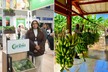
On Friday the 5th, the National Banana Corporation (Corbana) showcased the progress of its agronomic evaluation program in Pococí, Limón. The event featured a tasting of new banana cultivars developed in partnership with research centers in France and Brazil. The goal is to identify genetic materials with commercial potential that can resist Fusarium Raza 4 Tropical (Foc R4T) and black sigatoka, thereby enhancing the security of Costa Rica's banana industry.
The materials analyzed by the Research Directorate originate from agreements with the French CIRAD and the Brazilian institution Embrapa. The project aims to develop biological alternatives for two of the most damaging diseases affecting Musaceae worldwide, in a context where Costa Rica remains free of Foc R4T.
Corbana's management emphasized that, although the pest is not currently present in the country, the organization is taking preventive measures to block its entry. They believe this proactive approach poses challenges in the medium and long term, but it is essential for maintaining the continuity and stability of the banana industry in global markets.
Cultivar evaluation goes beyond pathogen response to include adaptation to local ecological conditions and consumer sensory acceptance. The agro-physiology team highlights the importance of analyzing how traits such as aroma, flavor, and texture are perceived. They also note that producers have begun participating in these evaluations through experimental plots, which will help build a valuable database if Foc R4T enters.
The technical workshop was held at the Research Centre in La Rita, where participants visited the Jardín de Musas. This space combines materials under study with other varieties preserved for scientific purposes, even though they are not part of the commercial market.
The process involved tasting six lines from Embrapa and CIRAD to assess whether these options meet international market quality standards. The research team emphasizes that public opinion on organoleptic attributes is crucial for evaluating the future development potential of these varieties.
The new plant materials were introduced under strict biosecurity protocols. They entered the country under controlled phytosanitary conditions, underwent quarantine and an adaptation period, and were then moved to the experimental areas. These measures aim to strengthen the sector's resilience and ensure a steady supply of fruit for international markets.
Source: caribeactual.com