 © Cape Dried FruitA large portion of Cape Dried Fruit Packers' dried fruit would have gone to buyers in the United States, says Cape Dried Fruit marketing director Martin Reynolds. The industry is weighing up its options and scouting for alternative markets in view of the 30% tariff applicable to South African stone fruit (lifted on other categories like oranges and exotic fruit). Producing dried fruit is a labour- intensive process, he says, and it is imperative to local economies that the industry rises above this challenge.
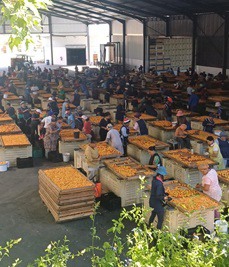
Right: cutting apricots at Paardekop Vrugte, Citrusdal, one of Cape Dried Fruit's shareholders
"The season turned quickly from colder temperatures to sudden hot days. We primarily farm for the production of large fruit, but this year the trees didn't have quite enough time: it became hot very quickly," Reynolds says. "As a result, the fruit is a bit smaller. We're having to advise our clients that there is not an abundance of extra-large fruit this year."
The apricot drying season started last week and will run until the middle of January, when the peach harvest starts, but that is surrounded by some anxiety.
Additional pear orchards secured
"The Klein-Karoo is experiencing a drought. There is a concern among growers that they won't have enough water to irrigate the peach blocks up to the very end," he says. "Nevertheless, there's a good peach crop hanging."
Pears are sourced not from the Klein-Karoo but from colder growing areas to ensure that the best fresh fruit is secured, he says. Cape Dried Fruit has also recently invested in additional pear orchards on the farms of shareholders.
Mango is dried at an affiliate facility in Makhado (Louis Trichardt), Limpopo Province. "The quality and volume for 2026 are encouraging, and we look forward to a good season as the first fresh product starts to arrive," Reynolds says.
Lower Turkish crop
The demand for dried fruit is compounded by a poor Turkish crop. International buyers are looking for an alternative to Turkish apricots for fruit salad mixes, and the good colour of South African dried Royal apricots, dried pear, and dried peaches makes it a good alternative.
Europe and Australia are solid markets for South African dried fruit; Reynolds remarks that Covid has, without a doubt, led to healthier eating habits, benefiting high-quality dried fruit sales. There is certainly also a younger demographic buying dried fruit as opposed to a couple of years ago.
South African dried fruit typically trades in a slightly higher price band than Turkish dried fruit, and is produced in much smaller quantities. To illustrate the difference between the two countries' dried fruit capacity, he mentions that the total for South African tree fruit driers was 6,600 tonnes in 2025, while Turkish apricot production alone is in excess of 100,000 tonnes.
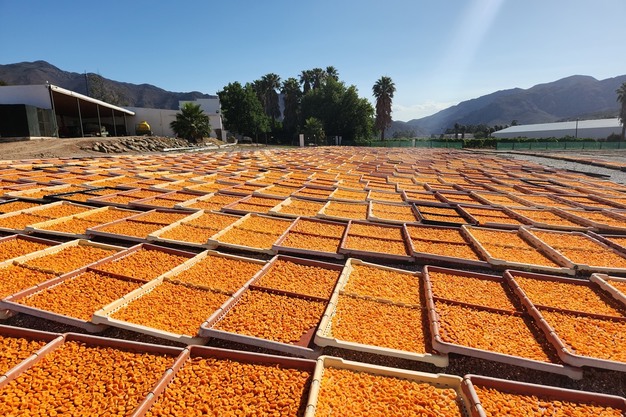 © Cape Dried Fruit
"We would love every South African to eat dried fruit"
South African dried fruit aficionados (typically older and higher-income consumers) compete directly with exports; regularly, there is feedback from consumers complaining about the price of dried fruit.
"Nationally, certain packers sell dried fruit at a premium, and it creates a negative perception to the consumer," Reynolds comments. " We would love every South African to have access to what we know to be a healthy and delicious snacking option."
For this reason, Cape Dried Fruit Packers has a strategic outlook for national sales. They sell through their own online shop as well as through their own bricks-and-mortar outlets and through several retailers. "We could export a larger percentage of our production. In the long run, though, we know maintaining local demand is a solid long-term strategy."
 For more information:
Martin Reynolds
Cape Dried Fruit
Tel: +27 23 614 2682
Email: [email protected]
https://capedry.com/