Banana suppliers to India's quick commerce platforms often struggle with fruit becoming non-saleable after just three days, says Ketan Wagh of Haitech Solution, a distributor of StePac's advanced packaging solutions in India for over a decade. "Preserving inventory becomes difficult when daily requirements keep changing. But Modified Atmosphere Packaging (MAP) can address this challenge by extending shelf-life during transit and storage, supporting procurement and distribution planning."
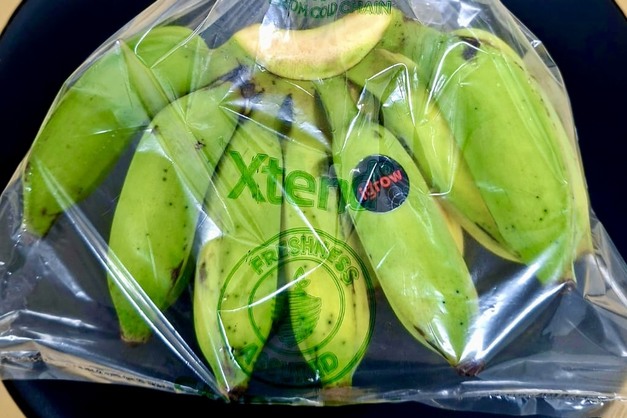 © Haitech Solutions
Wagh highlights how StePac's passive MAP solutions work automatically, as fruit respiration naturally drops oxygen and raises CO2 inside their laser-perforated packaging, slowing ripening and inhibiting microbial growth. "It's the equivalent of putting the fruit into gentle hibernation. The perforations on each bag are customized by respiration rate, where bananas would need different specs than pomegranates," Wagh mentions, adding that their solutions carry BRC, HACCP, and REDcert² certifications, which are recycle-ready. "The MAP bulk packaging holds between 2 to 4 kgs, while retail packs are more suited for smaller quantities. We also offer MAP lidding films for packing up to 500 grams of cleaned or cut fruit like arils, lychees, and strawberries."
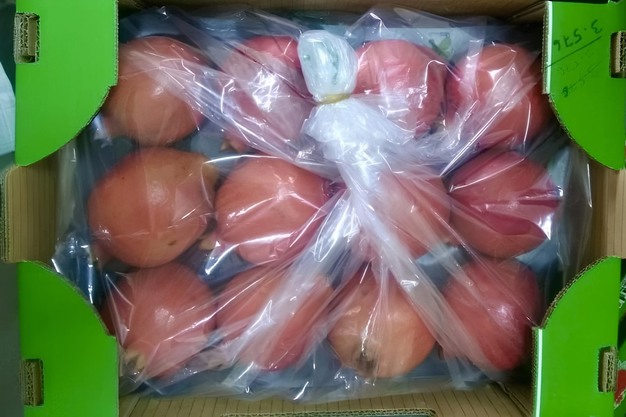 © Haitech Solutions
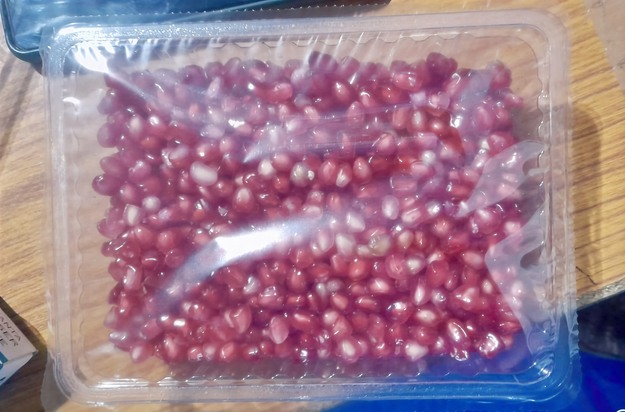
Indian pomegranates using StePac's MAP for shipments to Europe have reported consistent quality despite the 60-day transit time, while arils lasted for 15 days when protocols are adhered to, Wagh shares. "Building on this success, we will extend solutions for key Indian produce like bananas, to support importers and exporters with longer shelf-life, reduced spoilage, and better profitability. Our intent is to also upgrade existing packaging systems in India's e-commerce segment, which fail to meet consumers' expectations of freshness."
 © Haitech Solutions
Wagh makes an economic case for MAP's utility, especially during shipping delays resulting from procedural complexities. He adds, "Shifting from the more expensive air freight to sea shipping becomes more feasible with MAP maintaining quality over longer transit times. The assurance that fruit reaches consumers in good condition also helps buyers plan their logistics more efficiently."
He concludes with an emphasis on MAP's role as a complementary preservation layer. "As stakeholders continue to bridge gaps in cold-chain logistics and distribution, MAP solutions can provide a buffer against temperature breaks, to maintain quality even during brief refrigeration lapses, cut losses from farm to shelf, and ensure freshness to the extent possible."
For more information:
Ketan Wagh
Haitech Solutions
Tel: +91 98 92 443 566
Email: [email protected]