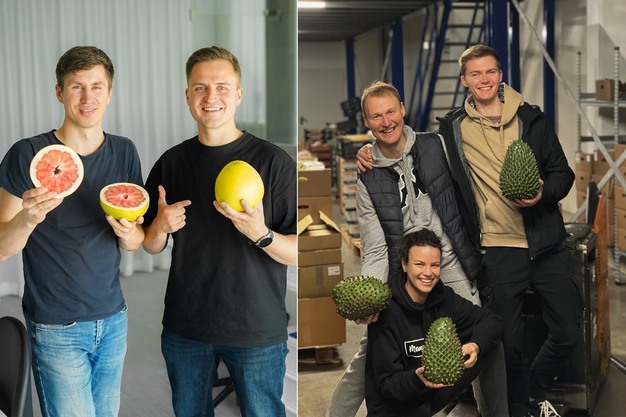
Mangų Mangas is now one of the most dynamic companies in the premium fruit distribution sector in the Baltic States, but its history can be traced back to a simple yet revealing experience: a trip to Sicily. "Ten years ago, we tasted some incredibly delicious fruit in Sicily. When we returned home, we were disappointed to find that it was almost impossible to buy such high-quality fruit in Lithuania. For years, shops had only offered the same imported fruit, which simply couldn't compare to the unique flavours we had experienced in local Sicilian markets," says purchasing manager Karolis Lasys (second from left in the photo below). "After finding the right partners, we set up the Mangų Mangas company, promising that everyone in the Baltic countries would be able to taste and appreciate the true flavour of avocados, mangoes, pineapples, oranges, figs, and other fruits."
 © Mangų Mangas
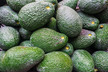
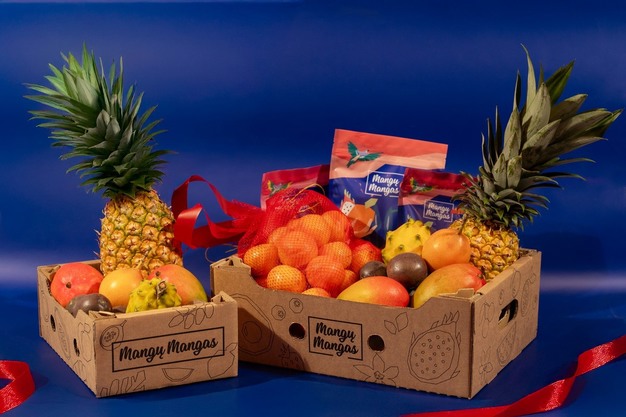
Mangų Mangas currently operates in all three Baltic countries: Lithuania, Latvia, and Estonia. "When we first started, our goal was simply to bring the most delicious mangoes to Lithuania, so it would be difficult to name only a few main products," explains Lasys. "Today, however, we have expanded to offer more than 70 different products, and this number is still growing. What we can say with confidence is that our core products are mangoes and avocados. Many of our customers find it hard to imagine everyday life without them, especially without avocados!"
The products' origins reflect a multicultural and well-structured supply chain
Most exotic fruits originate from South America, while Asia supplies more unusual and seasonal varieties. As for traditional varieties, most of these come from Europe. "Depending on the season, our range may consist entirely of Spanish or Italian produce. You can also find fruits from South Africa, which is home to some of the most delicious citrus fruits and other extraordinary exotic varieties."
However, managing such a large supply network also means facing complex challenges, as Lasys points out. "Each season brings with it the increasingly tangible effects of climate change, such as periods of drought, sudden storms, and problems related to irrigation and crop security. Added to these factors are geopolitical tensions, which affect trade routes, prices, and market stability. The only way forward is to continually adapt to the market situation and remain focused on achieving our goals, despite the difficulties."
 © Mangų Mangas
Italy is a particularly important and strategic partner
Mangų Mangas imports produce from almost all Italian regions, offering a diverse range of products that are hard to find elsewhere. "We purchase apples from South Tyrol, garlic from Veneto, and prized Piedmontese hazelnuts and kiwis. We also source stone fruits from Emilia-Romagna, watermelons and melons from Sardinia, lemons from the Amalfi Coast, grapes from Puglia, citrus fruits and Tropea onions from Calabria, and wonderful oranges and clementines from Sicily, as well as exceptional tomatoes." Each region contributes unique characteristics to the assortment, enabling Mangų Mangas to guarantee continuity and quality all year round.
The selection of suppliers is based on a very specific philosophy. "The goal," emphasises Lasys, "is not to offer fruit that looks perfect but lacks personality. Instead, we aim to offer products that provide an authentic sensory experience and evoke a place and an atmosphere. This is the yardstick by which we choose the producers we work with."
From a logistical perspective, freshness is a key consideration
Speed is crucial when working with fresh fruit. A good, reliable logistics chain is needed to keep the fruit fresh and tasty - from the moment it is grown and cared for to when the customer takes it home to enjoy with their family. However, many issues can arise along the way that may affect the quality and freshness of the fruit.
This is why reliable partners, efficient logistics, and streamlined processes are essential for consistently delivering high-quality fruit. "We are fortunate to work with the best partners, who support us in this endeavour. We also invest in high-quality equipment and storage facilities to ensure our fruit remains fresh and of the highest standard at all times."
Meanwhile, the Lithuanian market has undergone a profound change
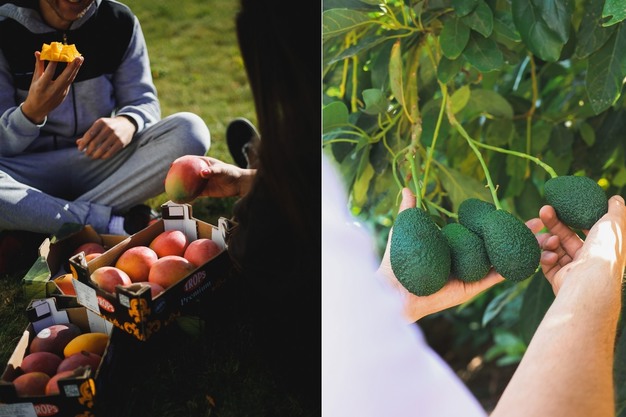
When Mangų Mangas first arrived in Lithuania, it was a completely new experience - truly amazing. "People were fascinated by the wide variety of fruit we offered. We like to think of ourselves as real fruit experts, and we want our customers to understand the meaning and unique flavours of the fruits they enjoy each week, too." As in many other countries, avocados are becoming a regular feature in Lithuanian households. "Many people now include them in their diet and choose Mangų Mangas because we work hard to ensure our customers always receive the very best fruit, especially avocados."
 © Mangų Mangas
"Over the years, we've noticed that our customers are becoming more knowledgeable and selective about what constitutes excellent fruit. While high-quality fruit can now be found in other places - especially since the pandemic, when specialty fruit and vegetable shops have started to appear - it is our commitment to quality and consistency that really sets us apart. While other options may offer good products, we always aim for the very best. We also feel it is our responsibility to educate our customers about fruit, including where the most delicious produce comes from. By sharing this knowledge, we help our customers to appreciate the true value of the fruit they buy," says Lasys.
"As I mentioned, avocado consumption is constantly growing, and Lithuanians are always willing to try new and interesting exotic fruits. We've been pleasantly surprised by the enthusiasm for unusual fruits. For example, we have durian fans who absolutely love it, and many people enjoy dragon fruit. By the way, dragon fruit also grows in Europe, specifically in the Andalusian region of Spain. While avocados remain our core product and their popularity continues to rise, our customers are always eager to explore new flavours and experiences. They enjoy discovering exotic fruits, tasting things they haven't tried before, and adding a little adventure to their everyday fruit routine."
Looking to the future
Lasys believes that technological innovation will become increasingly important. "I believe that, in the future, AI systems will play an increasingly important role in the production and distribution of fruit and vegetables - from selecting and ripening fruit to monitoring quality and managing packaging. These technologies will help to ensure consistent quality, reduce waste, and optimise logistics. At the same time, however, farmers will need to adapt to the effects of climate change by investing in sustainable cultivation methods, advanced irrigation systems, and resilient infrastructure, in order to maintain productivity and fruit quality over time."
"I also expect that rising temperatures in traditional growing regions may result in a shift in fruit production towards Eastern Europe, where cooler climates could provide better conditions for large-scale cultivation of fruits and vegetables in the future."
"In my view, the most effective and strategic approach for the future of fruit and vegetable distribution is to combine technological innovation with sustainable and climate-resilient farming practices," concludes Mangų Mangas' purchasing manager.
 For more information:
Mangų Mangas
Phone: +370 655 40976
Email: [email protected]
Web: www.mangumangas.lt