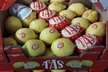
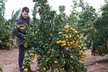
The Satsuma mandarin is one of the most widely cultivated citrus fruits, valued for its seedlessness, sweetness, and adaptability. Its exact origin has long been debated due to limited high-resolution genetic evidence. A new study has now produced a gap-free reference genome and analysed extensive citrus germplasm, allowing researchers to reconstruct the fruit's genetic lineage. The results indicate that the Satsuma mandarin likely originated from a natural cross between two indigenous Citrus reticulata varieties in eastern China.
Citrus fruits are globally important crops, and China is recognised as a key centre of mandarin domestication. The Satsuma mandarin has played an important role in citrus cultivation due to its fruit quality and stress tolerance, contributing to its worldwide distribution. Yet historical records and earlier genetic studies have not clearly identified its geographic or parental origin. Previous hypotheses alternated between China and Japan, and earlier molecular analyses lacked the resolution to determine its ancestry. These gaps have limited understanding of citrus domestication and complicated long-term breeding efforts.
Researchers from Huazhong Agricultural University and partner institutions published a study (DOI: 10.1093/hr/uhaf015) on May 1, 2025, in Horticulture Research, presenting the first gap-free reference genome of Satsuma mandarin. By sequencing 65 citrus accessions and conducting comparative genomic analyses, the team concluded that the variety most likely originated in Zhejiang Province, China, through natural hybridisation between the "Ruju" mandarin as the seed parent and the "Bendiguang" mandarin as the pollen parent.
The study assembled a telomere-to-telomere diploid genome with improved continuity over previous versions. Comparative analyses showed that Satsuma shares a highly similar genomic structure with indigenous mandarins from Zhejiang. Identity-by-descent analysis and statistical modelling supported a 96.6 per cent probability that Ruju and Bendiguang mandarins are its parents. The researchers also linked traits such as flavour and seedlessness to specific genomic regions, including transporter and male-sterility genes. Historical evidence of citrus movement from eastern China to Japan during the Tang and Song dynasties further supports the proposed origin.
The findings provide a clearer picture of the biological and geographic origin of Satsuma mandarin and offer a more detailed genomic foundation for breeding work. A better understanding of parental lineage and recombination patterns may help breeders broaden the fruit's genetic base, which has been historically narrow, and develop new cultivars with improved characteristics. The study also highlights the importance of eastern China as a reservoir of citrus genetic resources, supporting conservation of indigenous varieties. More broadly, the work shows how genomic research can connect crop domestication with cultural and historical exchange.
For more information:
Ping Wang
Nanjing Agricultural University
Email: [email protected]
www.academic.oup.com