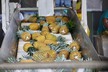
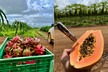
Agriculture Secretary Francisco Tiu Laurel Jr. said the additional tariff exemptions granted by the United States have eased concerns among Philippine fruit exporters. "So I'm happy that the anxiety of our industries, especially for fruits, bananas, pineapple, and coconut, has calmed down," he said in an interview.
Trade Secretary Cristina Roque and Special Assistant to the President for Investment and Economic Affairs Frederick Go announced that the U.S. executive order now grants exemptions from the 19 per cent reciprocal tariff for agricultural products not produced in the United States. These include coconuts, pineapples, dried mangoes, and fruit juices.
Tiu Laurel said the 19 per cent tariff had created uncertainty for investors entering export industries. "But now, everything is clear. The path is clear. The President's directive was to support our export products. And that will be our banner program for next year." He said the agriculture department will expand planting to increase export volumes to the U.S. market.
Fruit and vegetable products covered under the tariff exemptions include coconut (copra) oil, fruit juices, processed pineapples, desiccated coconuts, prepared or preserved coconuts, bananas other than pulp, dried guavas, dried mangoes, dried mangosteen, oranges, and tomatoes.
SINAG expressed caution regarding the announcement. Executive director Jayson Cainglet said, "The suspension of tariffs covering 200+ agricultural products was not specific to the Philippines." He said the product list, including tropical fruits, fruit juices, cocoa, spices, bananas, oranges, and tomatoes, was part of a broader U.S. policy aimed at addressing rising domestic consumer prices. He added, "What we are still awaiting from our trade negotiators is meaningful progress toward reducing the 19% reciprocal tariff, a benchmark that many other countries have already achieved."
The U.S. previously adjusted tariffs on Philippine goods several times this year, including a rate of 20 per cent announced earlier in July and a 17 per cent rate initially set in April. The latest exemptions create expanded access for Philippine fruit exports but do not modify the overall 19 per cent tariff structure on other categories.
Source: GMA News Online