Using smart technology and strategic networks to shape the wholesale market of the future is the core of the position paper New Wholesale Market Generation, presented by Javier Esquillor of Capillar IT at the World Union of Wholesale Markets (WUWM) conference. The paper summarises five years of research and international cooperation and outlines how wholesale markets can evolve into essential infrastructures for urban food supply.
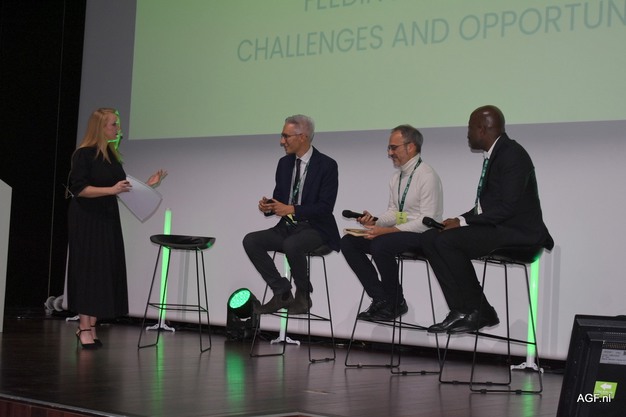 © Jannick Flach | FreshPlaza.com
Javier at the past WUWM conference (second from right)
"The point is that markets are not just physical spaces, but strategic hubs connecting production, consumption, and logistics," Javier explains. "Through digitisation and innovation, they can adapt to the reality of megacities, where food production close to the city will never be fully sufficient."
Digital and physical
According to Javier, wholesale markets need to invest in two types of infrastructure. Traditional physical infrastructure and digital infrastructure. "The digital aspect enables markets to collect, harmonise, and use data for economic growth. This goes beyond logistics. It creates new opportunities for trade, connectivity, and collaboration, both locally and internationally."
He stresses the importance of hyperconnectivity. "Megacities require food to be transported quickly and efficiently. That means markets need to be connected both locally and globally. Some markets already play a role in imports and exports, but the challenge lies in combining both dimensions."
EU cooperation and data sovereignty
The position paper links the innovation agenda of wholesale markets to the European Union's strategic priorities, such as harmonisation of information and data sovereignty. "The EU is developing digital platforms that allow countries to share economic data without barriers. Markets can participate in this by developing their own digital infrastructures, such as EFTI platforms and data spaces. In this way, a market becomes not only a logistics centre, but also a hub of digital innovation."
Thanks to this approach, Javier is now working with transport ministers from Spain, France, the Netherlands, and Finland on a network of fresh corridors, fast transport links connecting European cities through wholesale markets. Integration with Belgian infrastructure is also being considered for a corridor from Rotterdam to Valencia.
Large budget for innovation
European policy offers significant opportunities. "For the development of digital infrastructure and logistics innovation, almost €100 billion is available, and that amount will double from 2028. If markets do not make themselves visible and position their role clearly, they will miss out on this money."
With New Wholesale Market Generation, Capillar IT aims to show how wholesale markets are not only secure food supplies but can also drive economic growth, sustainability, and technological innovation in urban areas.
For more information:
Javier Esquillor
Capillar IT
[email protected]
www.capillarit.com