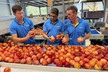
Peach producers in Pelotas and surrounding municipalities report favourable crop conditions ahead of the harvest scheduled to begin on November 19. Growers expect to harvest between 40,000 and 45,000 tons of fruit by January, compared with 30,000 tons last season. This represents a 40 per cent increase.
According to Adriano Bosenbecker, president of the Pelotas Peach Producers Association, winter conditions supported plant development. He said the season provided a consistent period of cold with sufficient chill hours, resulting in uniform flowering and fruit set.
Peach production in the Pelotas region is largely based on family farming. Around 900 families cultivate peaches on small rural properties. Production is dispersed across growers, and Bosenbecker noted that the largest farm in the region harvested less than 1 per cent of the total crop last year. Producing areas include Pelotas, Morro Redondo, Canguçu, Capão do Leão, Piratini, Arroio do Padre, and Cerrito.
Bosenbecker said the crop plays an important role in the local rural economy, providing income for growers and supporting seasonal labour demands.
The region is considered Brazil's largest industrial peach hub, supported by longstanding processing activity concentrated in Pelotas, Capão do Leão, and Morro Redondo. These municipalities form a unified industrial cluster due to historical territorial divisions.
Bosenbecker said processed peach products across Brazil largely originate from the Pelotas region. "When you go to any supermarket in the country and see peach jam, you can be 95% sure it's from here, because for every 100 cans, 95 are produced in our region," he said.
Source: Abrafrutas