Official figures for the 2024/2025 Egyptian citrus campaign reflect a decrease in export volumes but an increase in value per tonne. The decline in exports is directly linked to increased demand from the local orange processing industry. Eslam Gelila, an Egyptian exporter, comments on the figures of the last season.
 © Gelila
Egyptian orange exports decreased by 12.08% in 2024/25
Egyptian citrus fruit export volumes from September 2024 to the end of July 2025 totaled 2,102,316 tonnes, including 1,661,211 tonnes of oranges, compared to 2,391,145 tonnes of citrus fruit in the previous season (2023/2024), including 1,908,212 tonnes of fresh oranges, representing a 12.08% decline in citrus exports and a 12.94% decline in orange exports.
Eslam says, "The decline in orange export volumes, in the order of 240,000 tonnes, is directly related to the consumption of fresh oranges by concentrate factories. Although it is not clearly visible and reflected in the export figures, consumption by factories has far exceeded this 240,000-tonne gap, and we have been able to minimize the decline in exports nationwide thanks to a marked improvement in the quality of oranges and a large exportable portion of the total 6 million tonnes produced last season."
 © Gelila
Egyptian oranges "more expensive than Spanish"
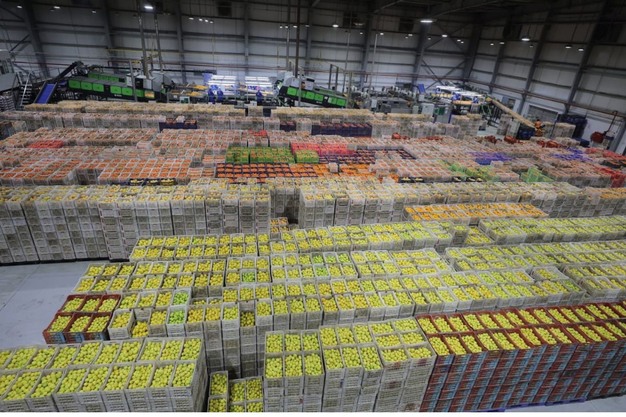
The decline in exports is not only due to the shortage of oranges caused by the emergence of new orange processing plants in Egypt, but also to the sharp rise in export prices, particularly towards the end of the season. Eslam explains that "orange prices reached levels that clients and consumers could no longer handle, or the ceiling of acceptable prices on the market." According to official figures for the season, the average value per tonne of oranges increased by 8.82% over the season as a whole, with total revenues rising from $829,138,713 in 2023/24 to $857,206,337 in 2024/2025. Total revenue for all citrus varieties combined rose from $1,086,291,251 to $1,133,656,932 over the same period.
Eslam adds: "For most of the season, export prices rose by 60-70% compared to the previous season, and even doubled in March 2025. However, exporters' margins did not increase at all. On the contrary, exporters had to reduce their margins in order to continue working. In Egypt's citrus sector, profitability is not calculated on a single campaign, but rather over five years, and last season was one where our margins were at their lowest despite Egyptian oranges being more expensive than Spanish oranges on European shelves, which I had never seen before."
 © Gelila
No change in the four main destinations for Egyptian oranges
The four main markets for Egyptian oranges in terms of volume remained unchanged from the previous season, namely:
- Russia, with volumes of Egyptian oranges exported in 2024/25 amounting to 247,628 tonnes, compared to 282,500 tonnes in 2023/2024, a decrease of 14.08%
- Saudi Arabia, with 246,421 tonnes exported in 2024/25 compared to 227,702 tonnes in the previous season, a decrease of 8.22%
- The Netherlands, with 201,426 tonnes of oranges exported in 2024/25, compared to 230,404 tonnes in 2023/24, a decrease of 14.38%.
- The United Arab Emirates, with 114,448 tonnes in 2024/25, compared to 126,255 tonnes in the previous season, a decrease of 10.31%.
According to Eslam, these four markets have structurally established themselves as the main destinations for Egyptian oranges, and exporters have managed to maintain good results despite rising prices. He adds: "Various factors explain the importance of these markets, such as geographical proximity, market size in terms of population, consumption habits, or their status as hubs for re-exportation. As for the factors that led to the decline in exports, it is difficult to distinguish them in quantitative terms. The self-evident factor is, of course, prices, which are directly attributed to demand from processing plants."
According to industry sources, another factor contributing to the decline in demand is sizing. The abundance of small-sized oranges last season may partly explain the decline in demand in Russia, for example, where importers have a clear preference for large oranges. However, Eslam downplays this effect: "If processing plants had a positive impact on the fresh orange export sector, it was that they absorbed a huge amount of small oranges. In my opinion, it is the price factor that is primarily responsible for the decline in export volumes."
 © Youness Bensaid | FreshPlaza.com
Eslam Gelila, CEO of Gelila
De-escalation in the Red Sea boosts exports to Bangladesh
In Asia, the easing of the crisis in the Red Sea has been reflected in certain markets, although the theme of declining exports is predominant:
- In Bangladesh, Egyptian orange exports reached 70,002 tonnes in 2024/2025, compared to 62,011 tonnes in the previous season, an increase of 11.41%.
- In Japan, 2,786 tonnes were exported in 2024/25, compared to 277 tonnes the previous season, an increase of 90.05%.
- In India, 92,529 tonnes of Egyptian oranges were exported in 2024/25 compared to 108,444 in 2023/24, a decrease of 17.20%.
- In China, exports fell by 44.89% from 41,738 to 28,805 tonnes.
- In Hong Kong, 3,356 tonnes were exported last season, compared to 6,535 tonnes the previous season, a decrease of 94.72%.
- In Malaysia, 30,554 tonnes were exported in 2024/25 compared to 36,462 tonnes in the previous season, a decrease of 19.33%
- In Indonesia, 3,767 tonnes of oranges were exported in 2024/25 compared to 4,522 in 2023/24, a decrease of 20.04%
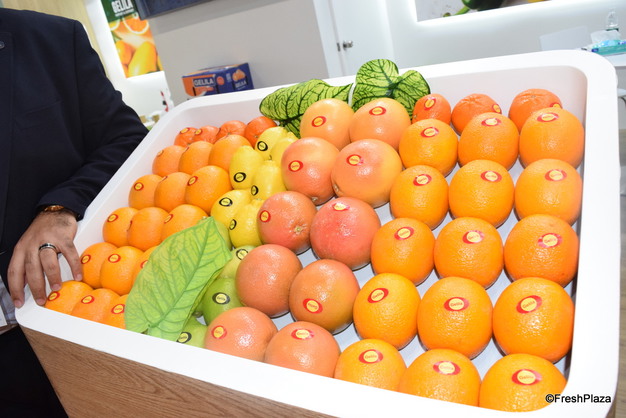
Eslam comments: "The crisis in the Red Sea, if defined by the number of shipping companies operating direct sailings, has eased considerably. Some markets have seen a remarkable recovery, such as Bangladesh, which experienced a long shortage of oranges due to the crisis and imported large quantities of Egyptian oranges last season, despite the opposite trend in the rest of South and East Asia. Beyond that, each market has its own specificities. In China, there was significant local orange production, accompanied by large volumes on the Chinese market from South Africa, in addition to Egyptian exports at the same time, which is extremely rare. This also had an impact on countries supplied by road from China as well as Hong Kong. In India, the prices of Egyptian oranges exceeded the acceptable range, and we felt the impact strongly. One of my Indian customers who had purchased 500 containers the previous season only took 100 this year and had to take a loss on his margin to market them."
 © Youness Bensaid | FreshPlaza.com
Sharp decrease in exports to Europe
The markets where the relative decline in exports was most pronounced remain those of the European Union and the United Kingdom. Exports to Spain fell from 104,692 tonnes in 2023/24 to 25,447 tonnes in 2024/25 (-311.41%). In Italy, export volumes fell from 30,514 in 2023/24 to 25,769 tonnes last season (-18.41%), and in France, from 36,061 tonnes to 11,977 tonnes (-201.08%). In the United Kingdom, exports fell from 96,192 tonnes to 72,510 tonnes, a drop of 32.66%. Curiously, export volumes to Belgium increased from 4,187 tonnes in 2023/24 to 5,674 tonnes last season (+26.20%), and remained stable in Germany (1,558 tonnes last season compared to 1,542 the previous season, or +1.02%).
Eslam comments on these figures, "In over a decade of work in this industry, I have never seen Egyptian oranges be more expensive than Spanish oranges in Europe. This is probably a first in history. It is therefore perfectly understandable that shipments are down. As for the Belgian market, I have no clear explanation for this increase. It must be said that last season was strange in several markets. Also, with each crisis, exporters redouble their efforts and innovation and knock on every door to sell their produce, which may have worked well in Belgium. Another factor that could explain the oddity seen in the Belgian and German markets is the increase in the prices of oranges re-exported via the Netherlands, favoring direct exports.
 © Gelila
Markets in Canada, Brazil, and Argentina continue on their growth trajectory
The picture is completely different in other emerging markets in North and South America. To recall, during the 2023/24 season, while the crisis in the Red Sea cut off Egyptian exporters from their markets in Asia, the European market was flooded with oranges, pushing exporters to develop new markets such as Brazil, Argentina, and Canada. These new destinations proved resilient last season:
- Canada imported 38,948 tonnes of Egyptian oranges in 2024/25, compared to 21,116 tonnes in 2023/24, an increase of 45.78%.
- Brazil imported 38,262 tonnes in 2024/25, compared to 28,604 tonnes in the previous season, an increase of 25.24%.
- Argentina imported 8,223 tonnes last season, compared to 1,442 in 2023/2024, an increase of 82.46%.
Eslam says, "Canada, Brazil, and Argentina are markets that have recently emerged in the context of the crisis in the Red Sea, and showed signs of growth in the season before last. Export growth has remained linear, as these markets are not very price-sensitive and consumers there are accustomed to Spanish oranges, which are historically more expensive than Egyptian oranges. Under normal supply conditions, I believe these three countries will become major destinations for Egyptian citrus fruits."
 © Gelila
The United States and Mexico appear on the map
A peculiarity of last season was that 25 tonnes of Egyptian oranges were exported to the United States and 25 tonnes to Mexico, a welcome news for Eslam. "There is no citrus export protocol between Egypt and the US or Mexico, and zero exports to date. I don't have any information on this, but I can speculate that these are likely trials or exceptional permits, and if so, it's excellent news that these markets should finally be open to Egyptian origin."
Brighter outlook for next season
The next orange season starts in early December and is shaping up to be easier, according to Eslam. He concludes, "Let's not forget that last season was exceptional. Orange concentrate prices have fallen significantly, from a peak of $9,000 per tonne last season to around $2,400 per tonne currently. In the scenario where their prices remain below $3,000 per tonne, I can say that the next season will undoubtedly be better for all players in the industry, from exporters to importers and consumers. We are also seeing a better distribution of sizes compared to last season and a greater presence of large sizes. But after all, we have learned to remain cautious, as each season brings a unique set of challenges for the Egyptian citrus industry.
For more information:
Eslam Gelila
Gelila
Tel. +20 100 000 4540
Email: [email protected]
www.gelila-eg.com