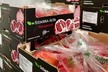
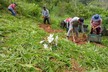
Panama's papaya season is progressing smoothly, with a steady supply available throughout the year, said Hormoz Safi, director of Panafruit, a company with over 20 years of experience in growing and exporting this tropical fruit.
"The company works with the Hawaiian Big Papaya variety, developed eight years ago from a cross between Hawaiian and Tainung papayas. This has allowed it to offer a product with unique features, a richer flavor, and a larger size compared to traditional varieties; a combination that has been well received in the main export markets, especially in the United States and Canada, which account for most of the demand," he emphasized.
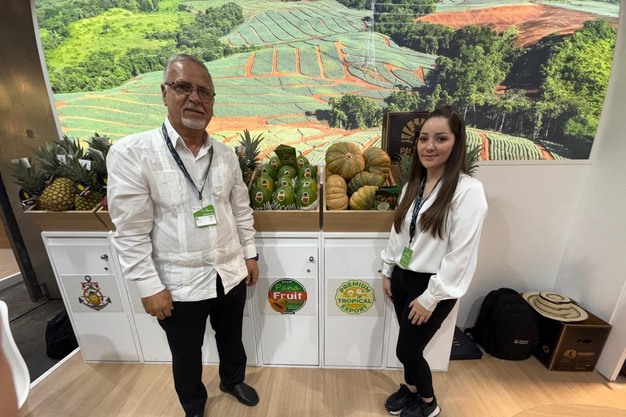 © Panafruit
Production remains steady year-round thanks to planning that adjusts to the region's changing weather. "Management is fundamental; when it rains, the plantation is raised to improve drainage, and during droughts, the necessary irrigation is provided," Safi stated. The company owns approximately 140 hectares of production, complemented by areas farmed by associated producers, ensuring a continuous supply.
"We currently export about 10 containers of papaya a week and aim to double this amount by the end of the year. This increase in supply is a response to sustained market demand and interest from new destinations, such as Spain and several Asian countries, where green papaya is commonly used in local dishes," he added.
Logistics combine sea transport, mainly used for shipments to North America, with air transport, which is necessary for distant markets or those with specific freshness requirements, such as Russia or China. "In destinations with more than 20 days of maritime transit, it is not viable to transport papaya, so airfreight is the only option," Safi added.
"Demand has remained stable, and the product maintains a favorable positioning in terms of price, boosted by its quality and organoleptic characteristics. Furthermore, the tariffs applied in the United States have not had a direct impact on the exporting company, although they have affected the end consumer," he stated.
"We have not experienced major issues with container or shipping space availability due to long-term agreements with leading shipping companies. This has helped maintain consistent shipments and ensure continuous supply to destination markets," he concluded.
For more information:
Ing. Maryan Safi de Aguilar
Packing Plant Manager
Panafruit S.A.
Tel: +507 62938697
Email: [email protected]
www.panafruit.com.pa