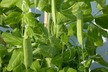
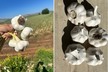
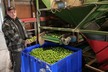
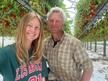
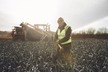
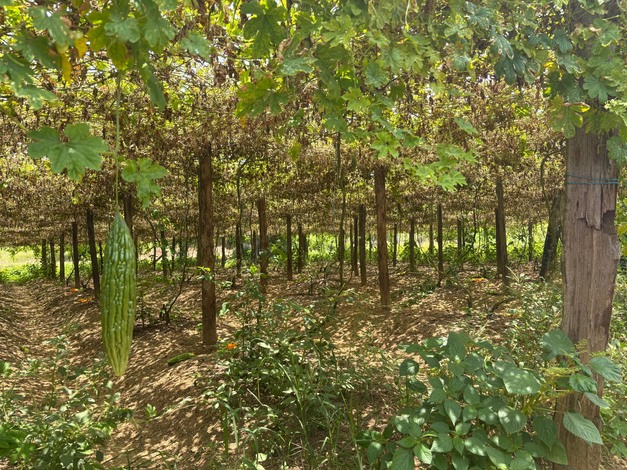
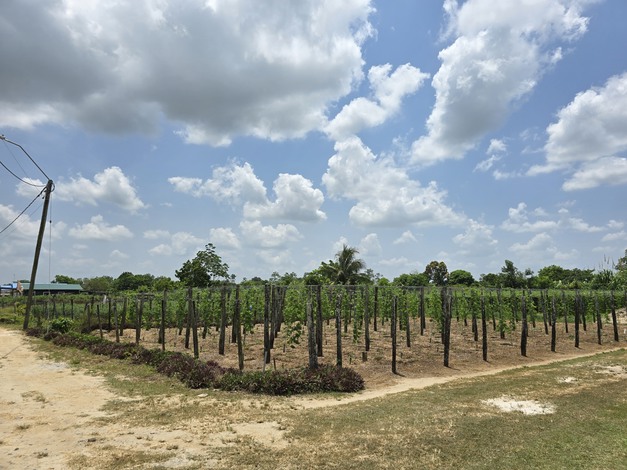
In the sweltering Paramaribo heat, grower Jaswant, a member of the agricultural cooperative Kwatta, works tirelessly on his one-and-a-half-hectare plot. "Thanks to a clever system of crop rotation, there is always something flowering or in the ground," he says proudly, pointing to his beds of sopropo, amsoi, tayer leaf, and agumawiwiri. "Even during the rainy seasons, I can keep delivering. This way, I have income all year round."
 © Pieter Boekhout | FreshPlaza.com
Ramdin Rabia, board member of the agricultural cooperative Kwatta, adds, "We need good research, cultivation knowledge, and data. Which crops, varieties, and cultivation methods are most suitable for Suriname?"
The agricultural cooperative Kwatta has existed for 67 years and was founded in the late 1950s by small-scale growers who wanted to be stronger together. "We are here to represent the interests of our members," says board member Ramdin Rabia. The cooperative purchases agricultural inputs such as fertilizers, seeds, and plant protection products, which it resells in its own shop to members and other growers. Since most of these inputs are imported, prices are highly dependent on the US dollar. "That makes it difficult for our members to estimate their costs," he explains.
 © Pieter Boekhout | FreshPlaza.com
Highly fluctuating selling prices
For Jaswant, fluctuating prices are a daily reality. "I have regular buyers, but I sell at market prices. These change from week to week, sometimes even from day to day. Today I sell a bag of baker for SRD 1,000, tomorrow it could be 500." An additional challenge is the quality of seeds. "One year the seeds produce good-quality fruit, the next year the crop, with seed of the same brand, is worth nothing. Fake quality, in other words."
When it comes to food, Surinamese are a conservative people, Jaswant explains. "Surinamese like what they know." They want a long baker, not a round one. And with chillies, only the red and yellow ones will do. Innovating with new vegetables is very difficult. "In neighboring Guyana, people are much more open-minded about that."
 © Pieter Boekhout | FreshPlaza.com
Climate stress and greenhouse dreams
Suriname's weather is not what it used to be. "Either it's too wet or far too hot. Sometimes you don't even know when to sow anymore," Jaswant sighs. Crops like sweet pepper and tomato are difficult to grow outdoors in the tropical climate anyway. Plastic greenhouses could provide relief, but the investment is usually too high for small-scale growers. "Building a greenhouse is expensive, and loans are hardly accessible. Banks require you to own the land, and they charge sky-high interest rates." Even those who have the capital must be able to recover the investment. "With the prices we get for our vegetables here, that's no guarantee," he says.
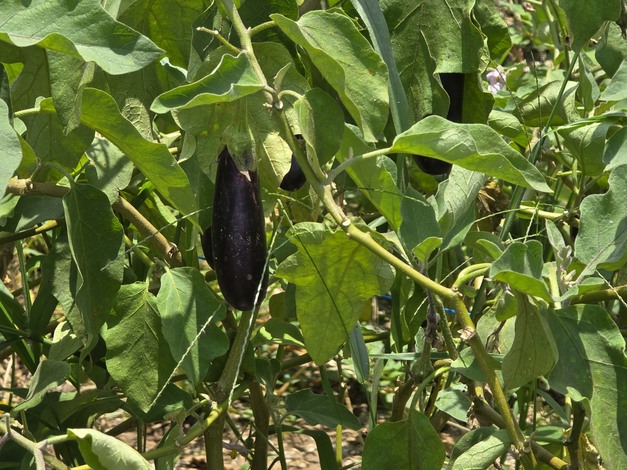 © Pieter Boekhout | FreshPlaza.com
"Today I sell a bag of baker for SRD 1,000, tomorrow it could be for 500"
Knowledge
According to both Ramdin and Jaswant, what is really lacking in Suriname is knowledge. "We need good research, cultivation of knowledge, and data. Which crops, varieties, and cultivation methods are most suitable for Suriname? We are often in the dark," says the cooperative representative. "Being able to build on the knowledge and experience of the Netherlands, where technology is the foundation, would help us enormously."
Support from the Surinamese government is, unfortunately, limited. "There is no money and little infrastructure for agricultural research. This lack of support not only limits yields but also makes the sector unattractive to young people. We need to increase productivity to show young people that horticulture has a future. And that future has to be technological, because young people think in terms of working smart, not hard," Ramdin concludes.
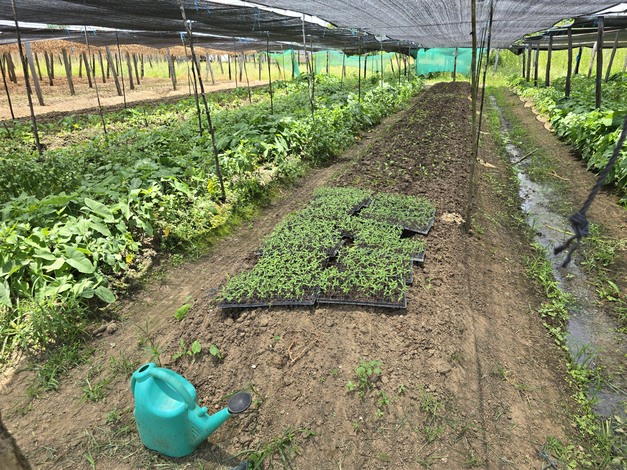 © Pieter Boekhout | FreshPlaza.comOwn propagation
For more information:
Ramdin Rabia MSc (board member)
Landbouwcoöperatie Kwatta en Omstreken GA
Kwattaweg # 602
Tel: +597 436844
[email protected]