Celery is a minor vegetable in terms of consumption and cultivation, although in recent years, greater awareness about its nutritional properties and new culinary uses has boosted public interest. Very importantly, its growth must also be linked to water saving, in the face of the prospect of cuts in the Tagus-Segura water transfer and the structural drought in Murcia.
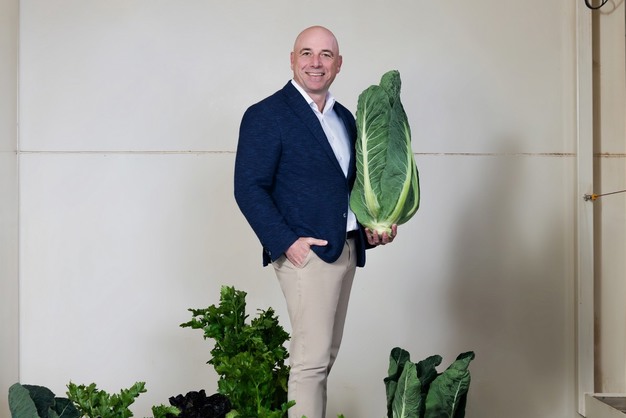
"In our portfolio, cauliflower is not showing strong growth, in contrast to broccoli, especially amongst young people in Europe. Lettuce is still on the rise, with a bigger upturn in the case of the Romaine. As for celery, it continues to arouse interest because of its particular taste. Our clients appreciate the continuity of our year-round service," says Rafa Martínez, manager of Fortini.
 © Fortini
"We work with all celery formats you can imagine, including organic. It's a vegetable that offers stability, and I believe consumption is bound to increase. There are many countries where celery is used only in broths, but it has culinary and nutritional properties that are driving people to use it also for dipping or smoothies. There are not so many celery professionals, and supplying a well-processed product regularly is difficult. In this regard, we stand out from our competitors," says the manager.
However, he also says that "when growing celery, you need more water resources than with lettuce. One of the main goals of our internal R&D research is to reduce water consumption, so we are testing irrigation systems and techniques to keep the moisture in the soil. In short, I think celery cultivation is going to increase while aiming also for greater water saving."
 © Lydia González
"We are working with both national and international supermarkets. Circumstances have changed, and now, few growers are planting adventurously; everything goes according to programs to be fulfilled for the most part by growers and clients," says the manager, who explains that there are various ways of securing fruit and vegetables. "Some clients agree on prices and volumes; others, only on volumes, and some others sign no such contracts, but I believe that, when there is a lack of produce, the latter, which is the traditional market, suffer great supply shortages. Nowadays, very few growers plant without well-planned objectives. Those who don't pursue contracts won't have any produce; this is a common trend in the sector at the moment."
According to Martínez, "celery is sold by the pallet, not by the truckload or container. It is a business focused on quality, rather than volume, and I believe this complicates the entry of competition from third countries. Furthermore, growing celery is challenging because it is a minor vegetable, so there aren't many phytosanitary products available. The trend in Europe is that a treatment method is lost every year, so treating whitefly or aphids is becoming very difficult; even more so in organic crops, even though some useful options are appearing."
As far as pest prevention, treatments, MRLs, and restrictions are concerned, the manager says that "conventional crops are becoming more and more similar to organic crops in terms of treatments. Without a doubt, the most unfair aspect is the disadvantage against third countries that are not subject to the same regulations."
As far as growth is concerned, the manager says that "it has been remarkable. In 2022, we didn't even reach €11 million, and in the 2025 season, we will be at €39 million. Now it's time for things to stabilize, and we expect moderate growth of between 5% and 10%."
Fortini is a company of Italian origin based in Murcia, mainly devoted to the cultivation and marketing of celery, cauliflower, lettuce, and fresh aromatic herbs. In total, it produces 100 million pieces per year on 1200 hectares.
For more information:
Rafa Martínez
Fortini
Tel.: +34 648 28 40 45
[email protected]
https://fortinigroup.es